




From April 27 to May 12, 2026, our representative, Yamada, stayed in Blantyre and Lilongwe, Malawi.
In this article, we would like to share an update on the activities carried out during the visit and Seibo’s future direction.
(In our previous article, we described how our work in Malawi began, provided an overview of our activities over the past ten years, and shared our 2026 updates. Please also refer to it here.)
Overview of Activities During the Visit: Visits to CBCCs
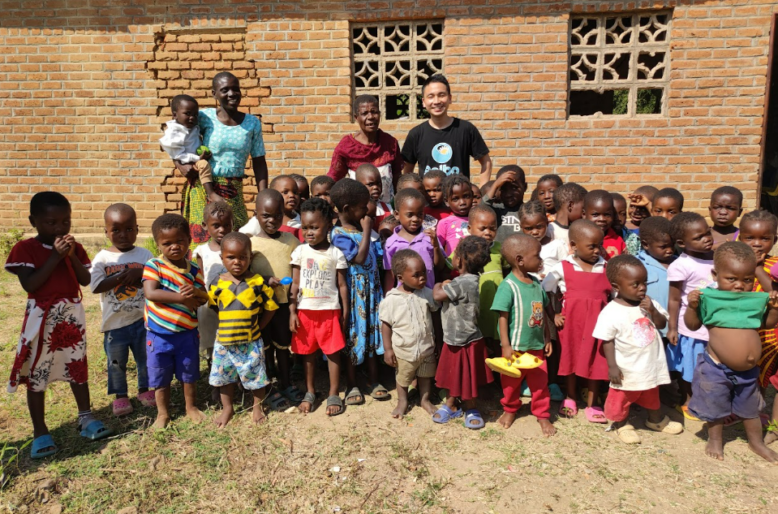
This visit focused mainly on visiting Community-Based Childcare Centres (CBCCs) in particularly impoverished areas, inspecting schools, recording messages for supporting companies, and discussing with local staff how reports from the CBCCs should be shared with Japan in the future.
At the same time, we were able to gain a deeper understanding of the duties performed by local School Feeding Officers, communicate future requests to them, and explore how support from Japan could be tailored to each nursery school.
Our Relationship with Beehive
The visit also provided time to consider and coordinate how Seibo Japan should respond to organisational changes within our partner social enterprise, Beehive, how those changes are broadening the impact of Seibo Japan’s activities across the community, and how that impact should be appropriately reported.
Beehive Digital
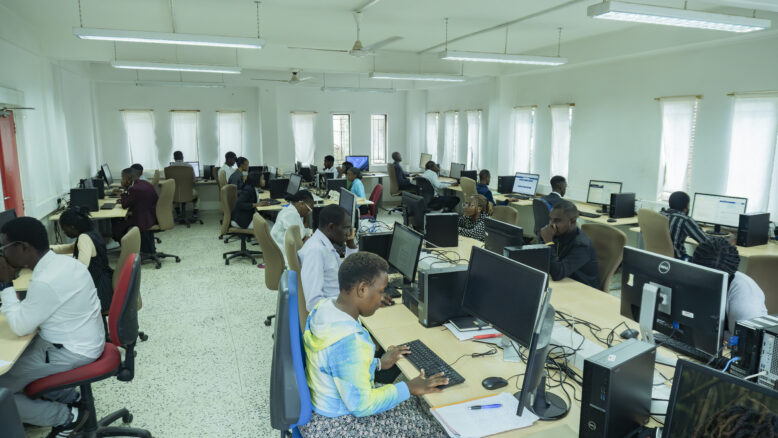
Another major update is that BeeTech, also known as Beehive Digital, which operates within Beehive, will work with Seibo Japan to provide online courses to Seibo’s network of schools in Japan. These courses will cover Malawian culture, changes taking place in local communities, coffee distribution, the economy, and other topics.
We call this service the “Impact Lesson.” In the future, it will also help develop people in Malawi who can work in customer service and take on outsourced business operations for companies in Japan and elsewhere.
In addition to supporting school meals, this creates a path toward a future in which Malawian people can actively participate in the workforce, while also serving as a bridge toward more sustainable activities.
Seibo Mills
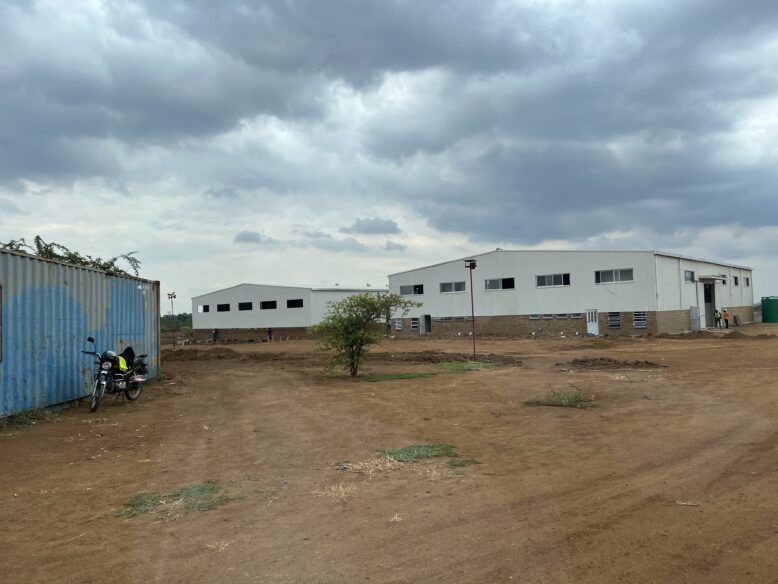
At the same time, we visited Seibo Mills, the factory that produces Likuni Phala, a maize-based porridge currently supplied by Seibo to 12 primary schools in northern Malawi and 45 nursery schools and CBCCs in southern Malawi. The factory operates with support from the UK-based Krizevac Project.
We observed the processing of the product, the trucks used to transport 20 tonnes of school meals to the north, and preparations to supply the product to charities, companies, and supermarkets within Malawi.
This visit also led us to consider the possibility of importing the product into Japan in the future.
Visit to the Ambassador of Japan to Malawi and Media Appearance
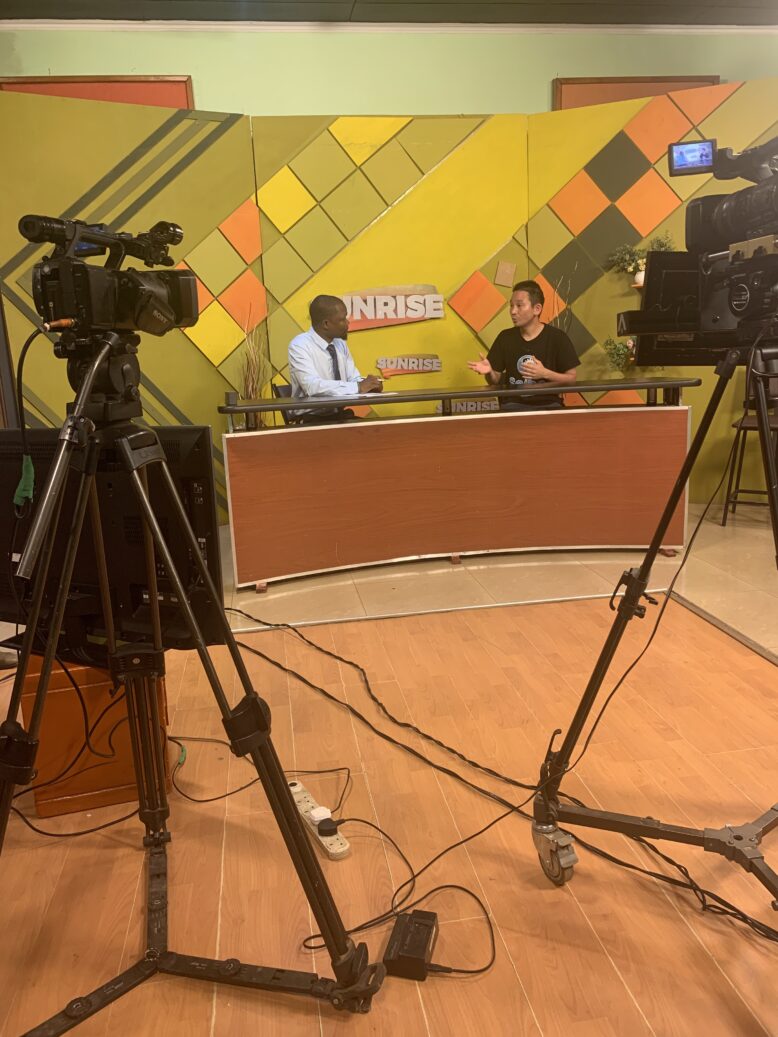
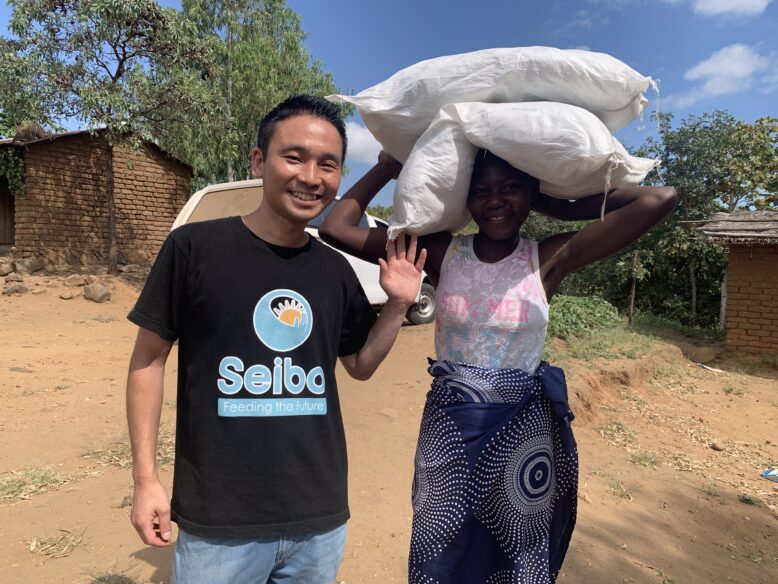
In Lilongwe, we also met Ambassador Naito, the Ambassador of Japan to Malawi. Over dinner, we discussed Seibo’s work as a bridge between Malawi and Japan.
We also had the opportunity to appear on the local media programme Sunrise, where we spoke about the development of our activities and our latest updates before returning to Japan.
Below, we will explain the activities described above in greater detail.
Visits to CBCCs: Community Conditions and Collaboration with Seibo Staff
1. Chisandeu CBCC
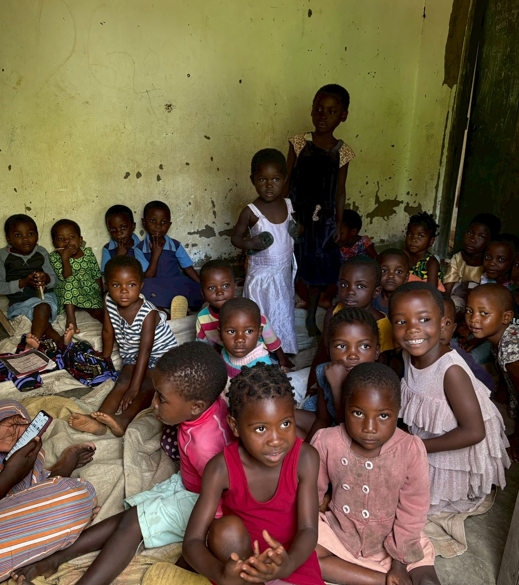
【Current Situation and Challenges】
The original school-meal storage facility was completely destroyed by the severe damage caused by a natural disaster, specifically a cyclone.
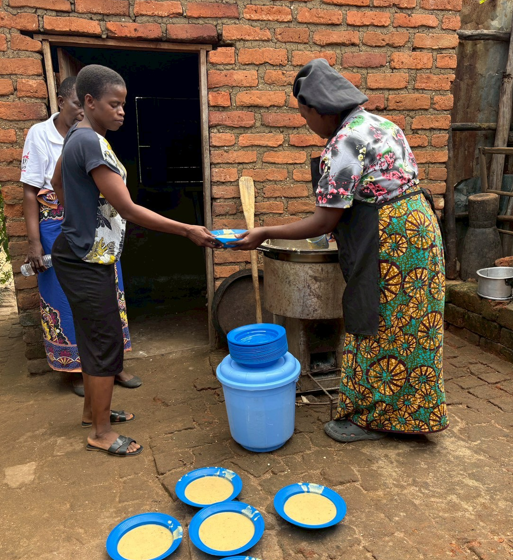
【The Strength of the Community】
Despite the desperate situation created by the loss of the storage facility, the local Village Head offered part of his own home free of charge so that it could continue to be used as a storage space for Likuni Phala school-meal powder.
This story symbolises the warm resilience of the people of Malawi, where adults in the community support one another flexibly even when infrastructure has been destroyed.
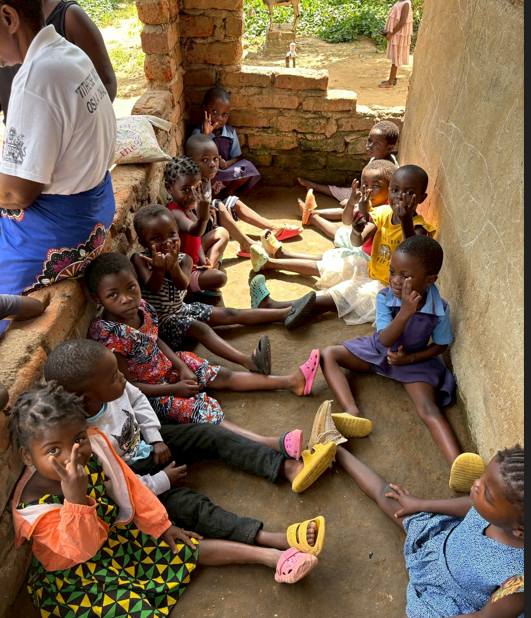
2. Mulambe CBCC
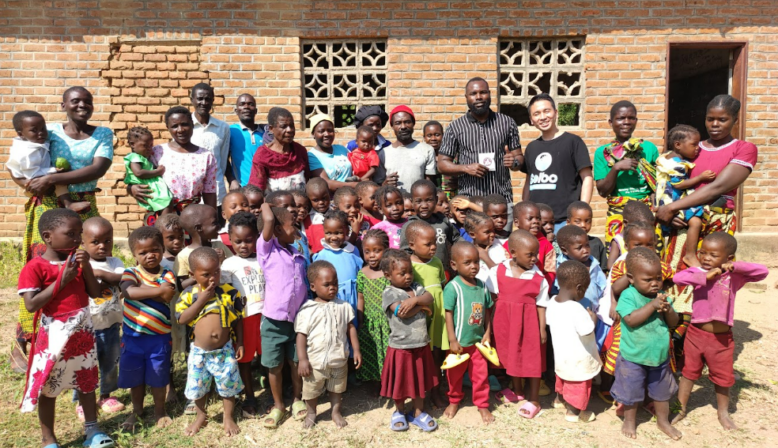
【Crime Prevention and Safety Measures】
To reduce the risk of theft of the valuable Likuni Phala school-meal powder, the local community voluntarily introduced safety measures, including moving the kitchen from an outdoor location to an indoor space.
The community demonstrated a strong awareness of security and a proactive commitment to protecting the school meals provided by Seibo.
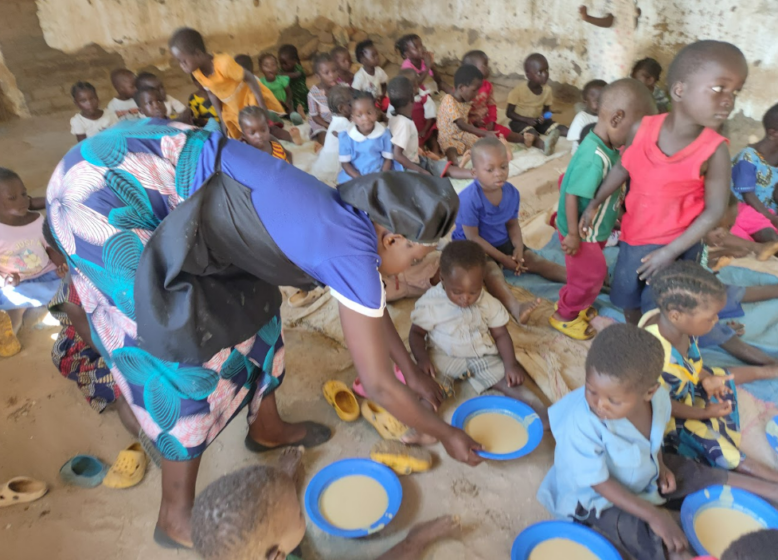
3. Chisomo CBCC
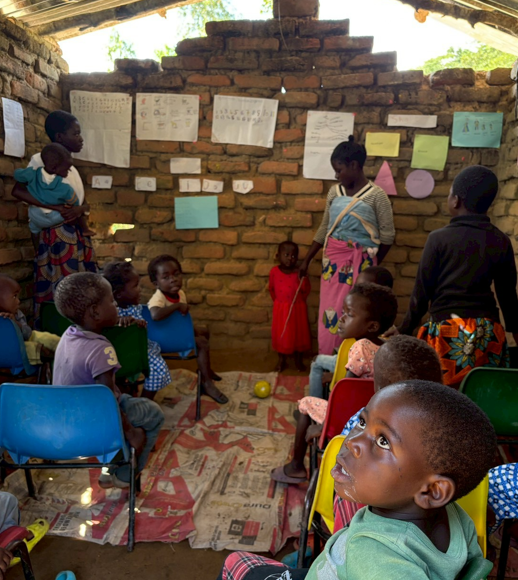
【Current Situation and Challenges】
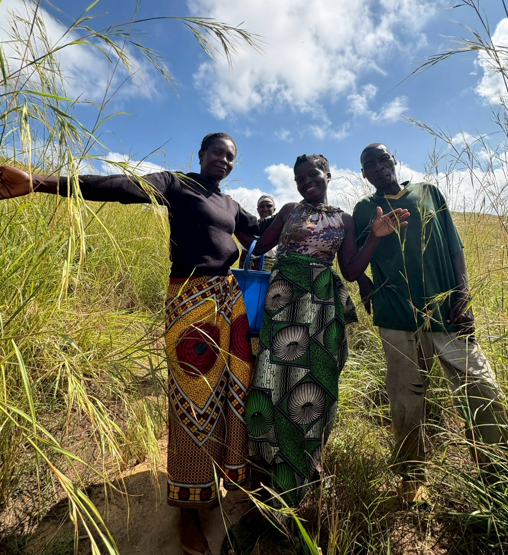
This centre is located in a mountainous area so isolated that visitors must walk for more than 15 minutes after leaving their vehicle.
As a result, support from the government and outside organisations has great difficulty reaching the centre.
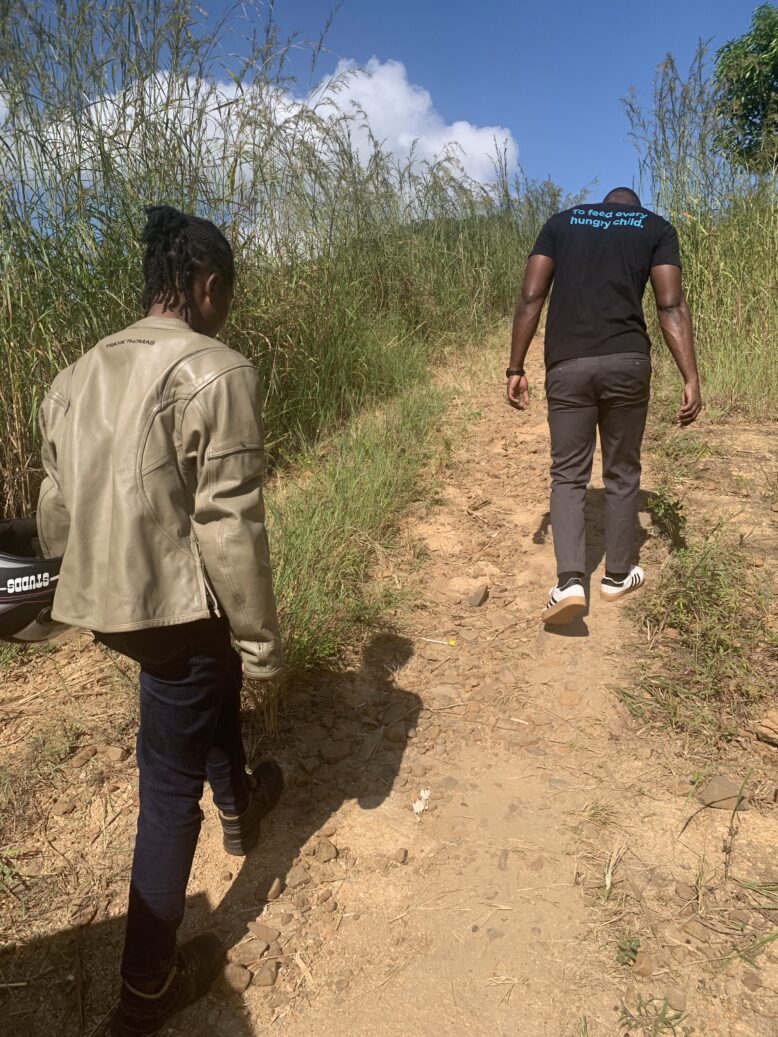
【The Impact of Support and Cost Estimate】
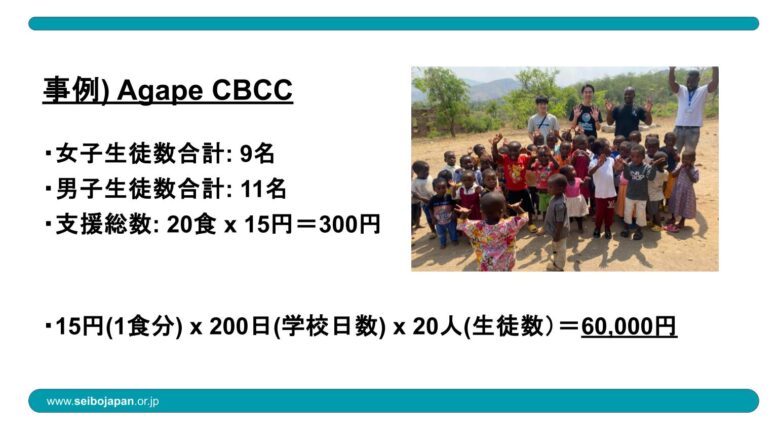
Approximately 35 to 40 children are waiting to receive school meals here. Because one school meal in Malawi costs only 15 yen, our calculations showed that approximately 65,000 to 100,000 yen per year would be enough to provide school meals for every child at this school for an entire year.
There are many other similar cases in which a specific amount of funding can support an entire school. Seibo therefore plans to create campaigns that will allow us to continue informing people in Japan about opportunities to support school meals.
High school students are currently conducting a crowdfunding campaign for Chisomo CBCC. Please see it here.
【Future Outlook】
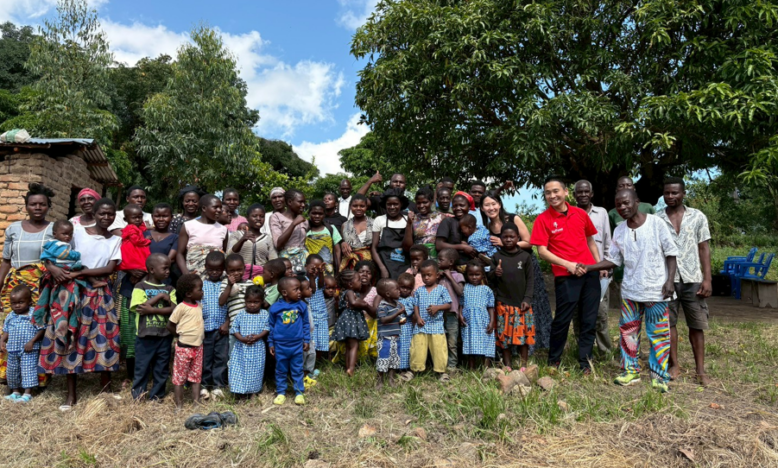
A group of volunteer high school students in Japan is currently taking on a crowdfunding campaign for Chisomo CBCC. The project aims to provide school meals and construct a well that will deliver safe water.
In the future, this initiative is expected to develop into a “matching support model,” also called a Nursery Mapping Partnership, in which one school or one company in Japan supports one specific school in Malawi, allowing both sides to see and understand the people involved.
A proposal for support partnerships with local governments and schools is available here.
4. Makuika Nursery School
【Outstanding Leadership】
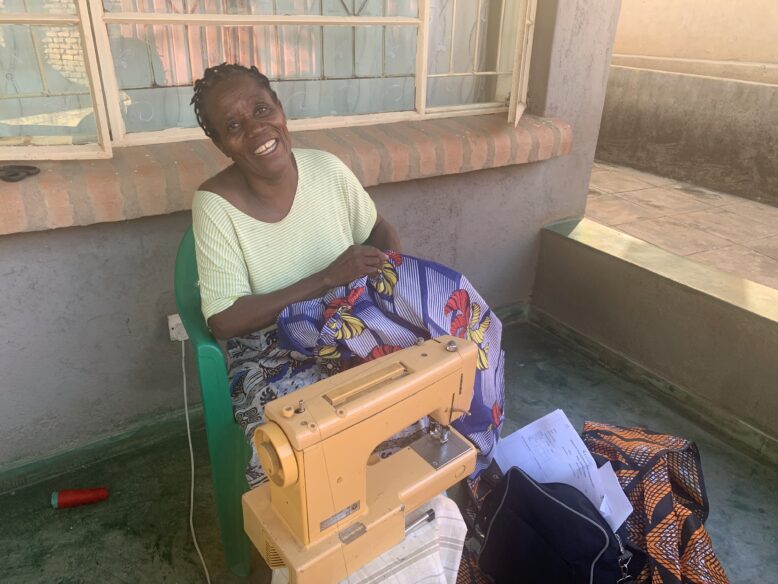
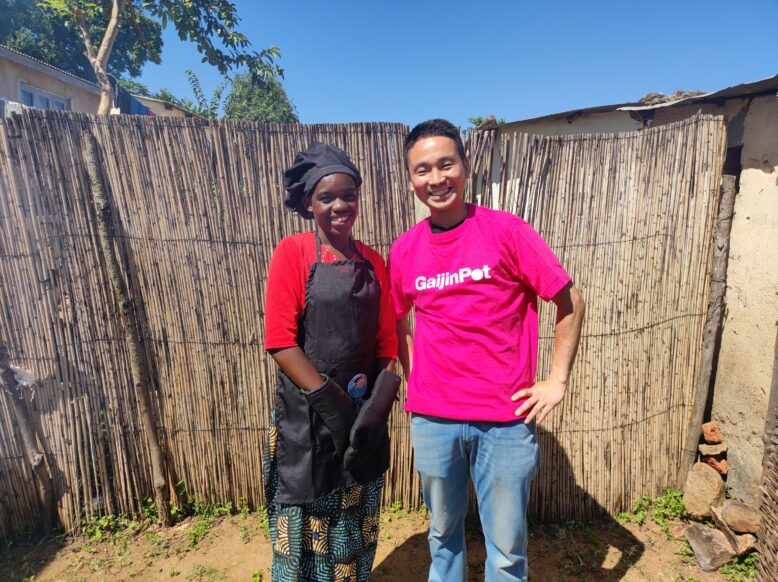
This nursery school is operated by Joyce Phiri, a female entrepreneur in her fifties.
Using her professional skills as a tailor, she teaches sewing to local mothers. Through the relationships created by this work, she welcomes her customers’ children into her nursery school, putting an impressive circular social-business model into practice.
【A Dream for the Future】
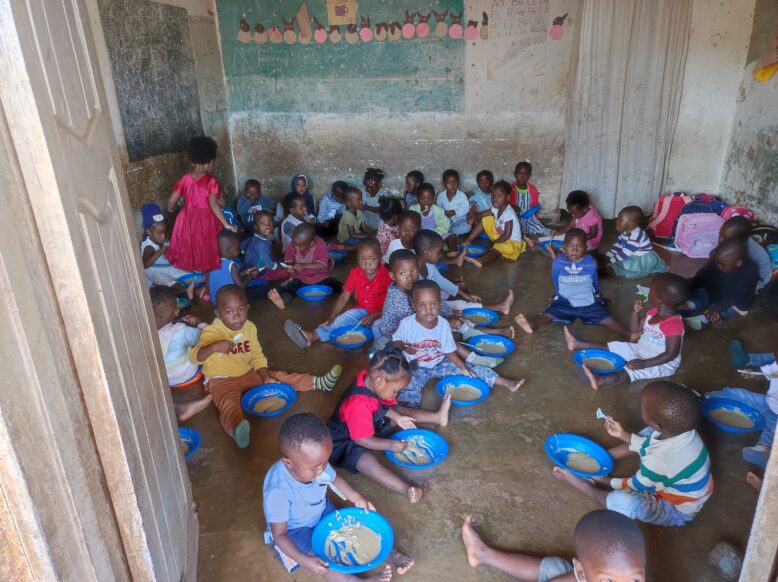
The current site is rented, but Joyce has a firm dream: “In the future, I want to purchase my own land, take ownership of it, and develop this nursery school further.”
We hope to continue exchanging information with English-speaking female CBCC leaders such as Joyce and to build partnerships that can also contribute to fundraising.
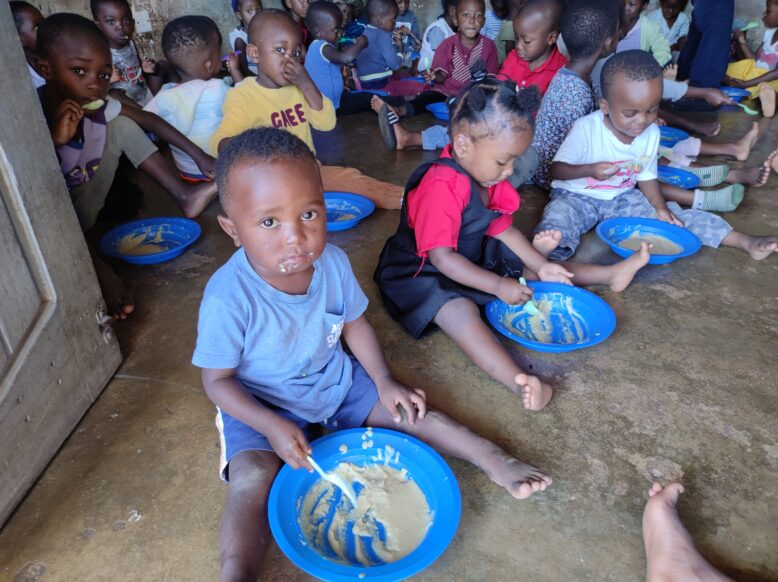
5. Bwenba CBCC
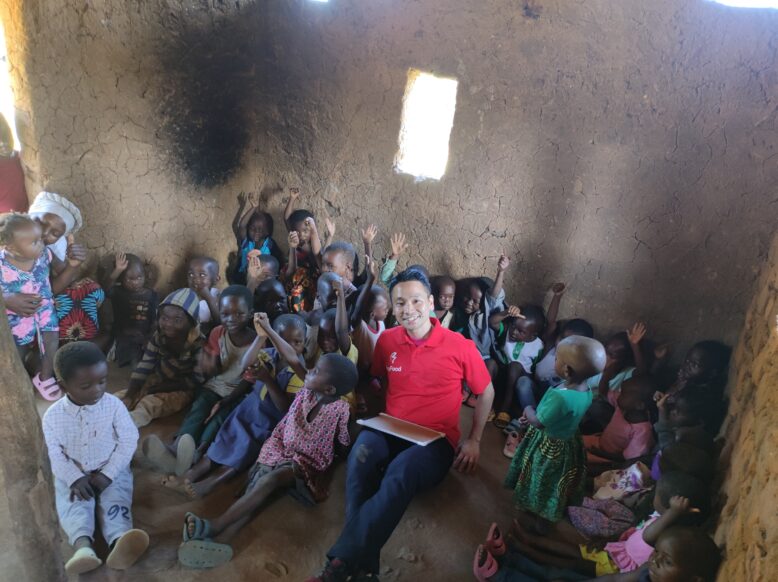
【Location and Access】
The centre is located in a remote area approximately one and a half hours by car from the centre of the Chilomoni district.
【Facilities and Challenges】
Approximately 30 children attend the centre, but the kitchen is outdoors and there is only one small classroom.
No toilet could be seen, and the centre uses a shared space some distance away to store its school meals.
The lack of infrastructure, including a hygienic kitchen, classrooms, and a dedicated storage facility, is a major challenge.
【The Children’s Daily Activities】
The centre opens at around 8:00 a.m. The children wash their hands, draw pictures, practise numbers and the alphabet, dance, and take part in other activities.
There is a large outdoor area where the children run and play energetically. They eat their school meal at around 11:30 a.m., after which the day ends.
【Future Approach】
Although Seibo could directly support the development of missing infrastructure, we believe that encouraging infrastructure development led by the community itself will create stronger local ownership and make the activities more sustainable.
6. Tsaminari CBCC
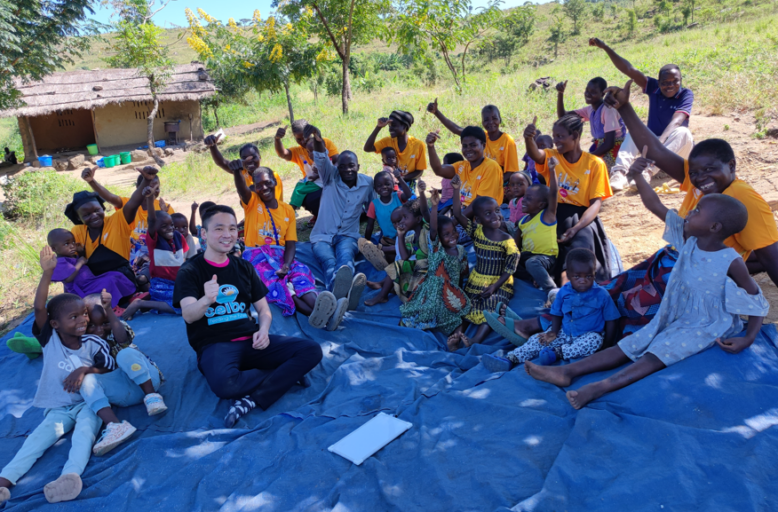
【Location and Access】
The centre is located on top of a hill approximately 15 minutes from Bwenba.
Visitors must still walk a considerable distance after leaving their vehicle, making the location difficult to access.
【Community Characteristics and Strength】
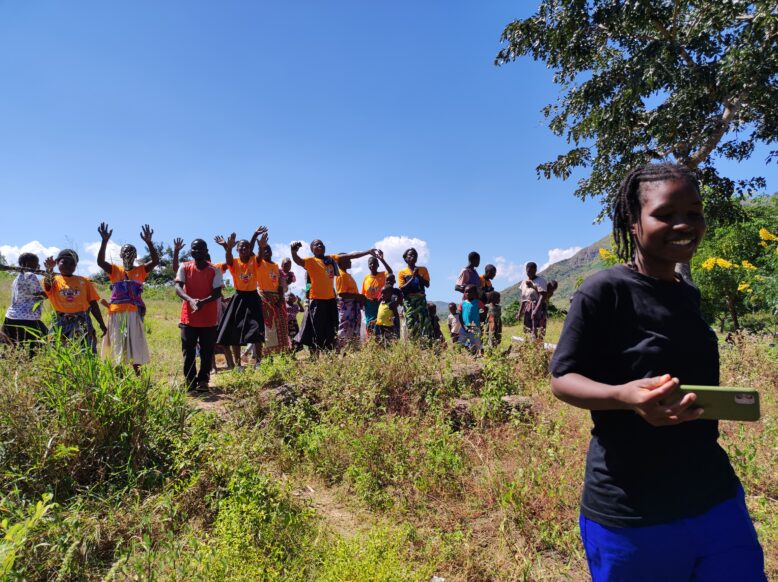
Although the centre had been reported as needing support for a well, the community currently keeps it operating by working together to carry water themselves.
In addition to three caregivers, many adults and parents help with the activities. Of all the centres we visited, this one had the brightest and most cheerful atmosphere.
【The Children’s Daily Activities】
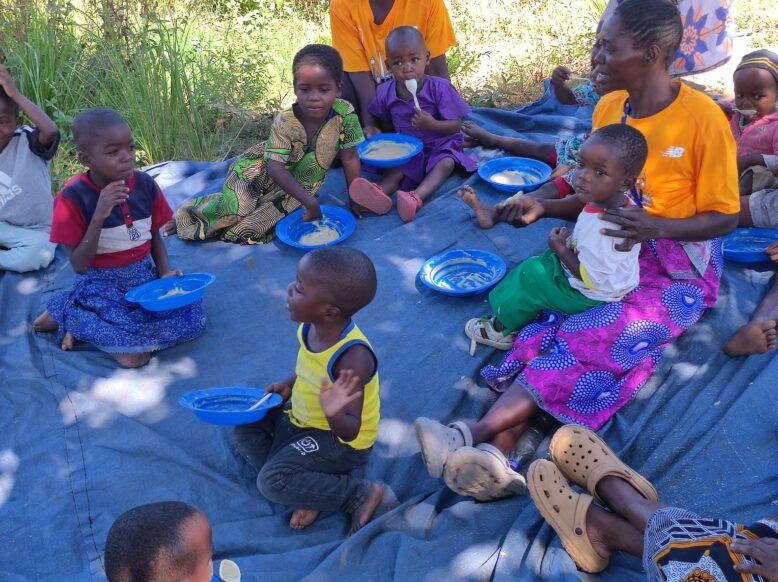
Because the nearby villagers know one another well, the centre has a very warm, family-like atmosphere. Dancing, studying, and outdoor activities are all common, and the children return home after eating their school meal.
This is an excellent model demonstrating how strong community ties and cooperation can successfully compensate for a lack of infrastructure.
7. Mptola CBCC
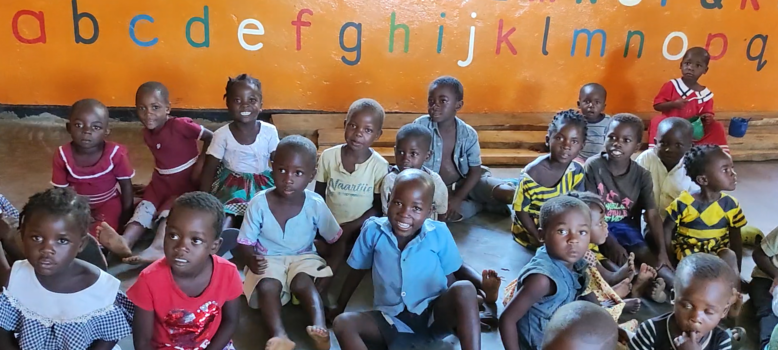
【Location and Access】
The centre is located farther downhill from Tsaminari CBCC.
【Facilities and Challenges】
The water problem is severe, and a request for support to construct a well has been submitted. At present, water must be collected from a distant location.
The kitchen is outdoors, and the prepared school meal is carried into a long, narrow classroom where the children eat. Many of the children appear to come from impoverished households.
【Community Conditions】
Despite the difficult environment, community members are very positive and actively participate in the centre’s activities.
The children could be seen playing energetically inside the long classroom.
8. Tibrane Nursery School
【Location and Access】
The nursery school is located behind St. James Church.
【Facilities and Operations】
The classroom is spacious, and the nursery school is generally operated in a stable manner. The prepared school meals are served to the children in an area outside the classroom.
【Challenge at the Centre】
The nursery school experienced the theft of valuable Likuni Phala school-meal powder. An application for replacement supplies is currently being processed.
Going forward, security procedures and management guidance will need to be reinforced to ensure that food is stored safely.
9. Holy Cross Nursery School

【Operating Organisation and Characteristics】
This nursery school is operated by the Anglican Church, which has its origins in the Church of England.
A primary school and diocesan offices are also located on the same grounds, making the site an important centre for the local Christian community.
Future Outlook and Approach
During this visit, we were able to build a direct relationship with the pastor responsible for managing the facility.
This creates considerable potential to secure support for school meals and further activities through international collaboration with the Anglican Church network in Japan or through the launch of a dedicated crowdfunding campaign.
10. Future Leaders Nursery and Primary School
【Location and Access】
The school is conveniently located near Tukwa Market and is easy to access.
【Age Groups and Scale of the Facility】
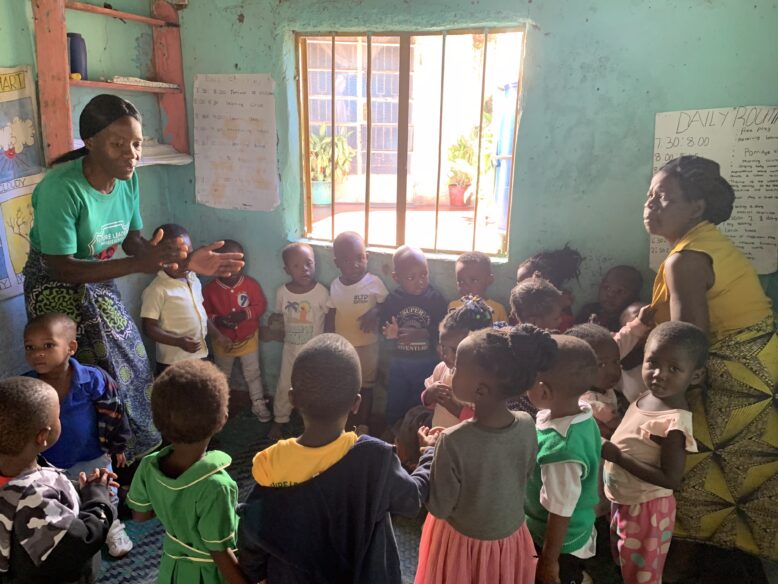
This is a large facility that provides continuous education from daycare for children aged one to two, through nursery school and a reception class preparing children for primary school, to primary classes.
Many children of different ages and backgrounds attend the facility.
【Operations and Future Outlook】
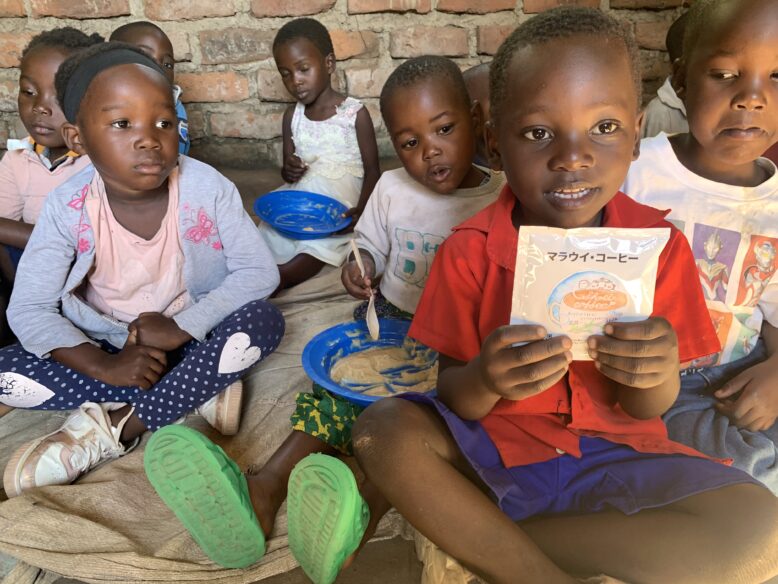
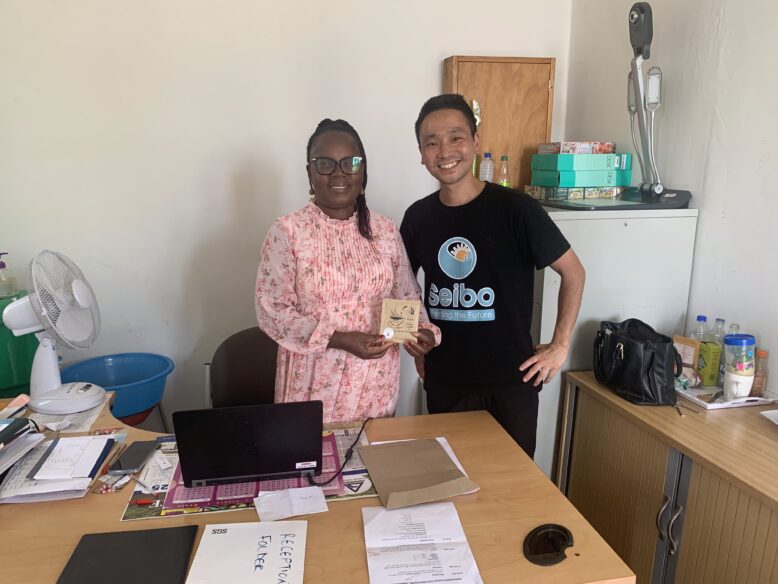
The headteacher and manager, Therese, is highly proactive. We had communicated with her by email before the visit, and she readily agreed to take photographs holding drip coffee packs when we arrived.
In the future, we are considering cross-border, two-way educational programmes, including online exchanges with schools in Japan and the sharing of videos showing daily life at each school.
11. Mwai CBCC

【Characteristics and Operating Structure】
This CBCC serves as a community hub closely connected to the local area.
At the centre, two community members work together with one woman responsible for record-keeping.
【Activities and Responsibilities at the Centre】
Led by the woman responsible for the records, the centre carefully records children’s attendance, the number of school meals consumed, and inventory levels, including opening and closing balances, in a notebook.
This demonstrates organised and transparent data management.
Moving to the Next Stage of CBCC Support
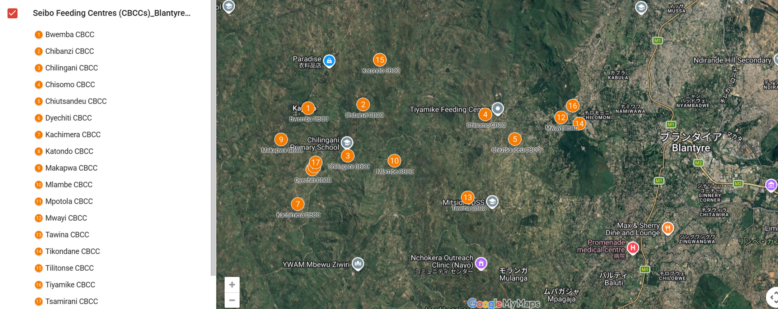
Seibo will now organise profiles of the 17 CBCCs it currently supports, together with details of the support each centre requires, and will move forward with specific fundraising campaigns.
Through these efforts, we want people in Japan to feel more directly that they are involved in supporting Malawi and that they are helping to support the future of the world from Japan.
You can also view details of our membership programme here.
We will continue sharing more information about Malawi through Instagram, X, YouTube, our official LINE account, and other channels.
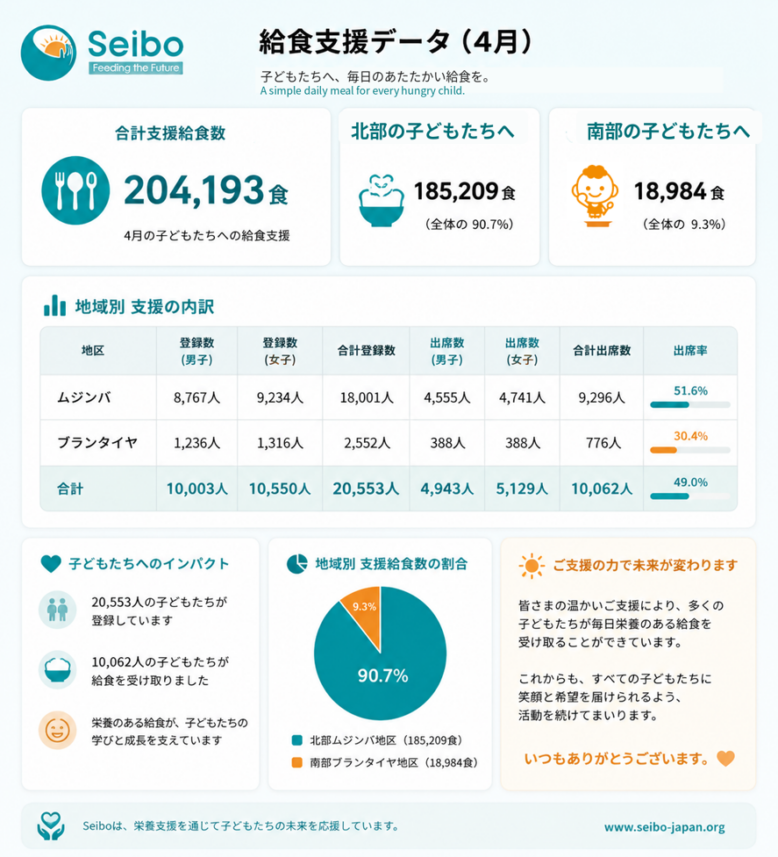
【How Reports Will Be Presented】
Our Connection with Beehive: Expanding Seibo’s Social Impact
Seibo began as an outreach initiative of the Mother Theresa Children Centre (MTCC) in Blantyre, Malawi.
In 2016, children who were able to come to MTCC could receive school meals. We then recognised that extending the programme to children and mothers in mountainous areas could strengthen the government’s school-feeding efforts, improve school attendance, and provide particular support to women within their communities.
This led to the establishment of Seibo Maria Malawi, an organisation specialising in the distribution of school meals.
Seibo Japan is the organisation that supports Seibo Maria from Japan.
Seibo Japan took over part of a school-feeding programme previously run by JOCCA in Japan. Another important symbol behind Seibo Japan’s identity is that Malawi provided support to Japan following the Great East Japan Earthquake.
Later, Seibo Maria physically became part of the Mary Queen of Peace Catholic Institute (MQOP), which is overseen by Beehive and located within its vocational training centre.
As a result, Seibo Japan became involved in the wider social impact generated by Beehive’s activities.
For example, school meals at St. Kizito Primary School within MQOP are supported in part by Seibo Japan. In the future, part of the revenue generated by the work of Beehive Digital staff will also be used to support school meals and employment.
Going forward, in addition to our school-feeding programme, we will introduce the work carried out within Beehive by our partner organisations following these organisational changes as part of the social impact generated by Seibo.
Specific Examples
・Employment created by Beehive Digital, the resulting social participation, and the educational added value provided to Japan
・The educational activities and growth of students at St. Kizito and Carlo Acutis, supported in part through school meals
・The social impact of community support provided by MTCC
The Social Impact Created by the Mother Theresa Children Centre
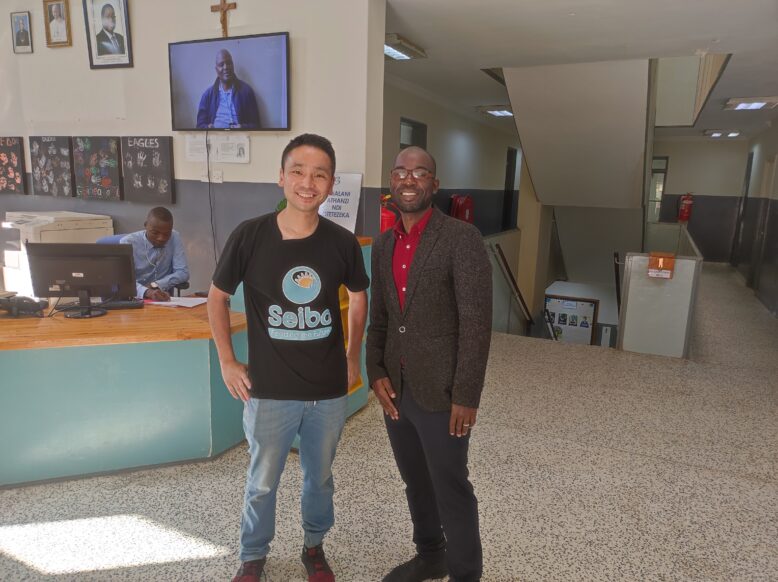
1. Results of the School Feeding Programme
Since taking over the programme in March 2023, MTCC has expanded school meals from three times per week, previously consisting of nsima with beans and vegetables, to daily provision.
The number of children supported has increased from the original 48 to 55, including boys and girls.
Regular school meals have improved malnutrition among the children, reduced the incidence of illness, and improved school attendance.
These results demonstrate the importance of Seibo’s school-meal support.
2. Scholarships and Comprehensive Support for Children
A total of 140 particularly vulnerable children attending nursery school, primary school, and secondary school receive full support.
In addition to exemption from school fees, sponsored children receive new uniforms, three nutritious meals per day, and free school-bus transportation for those living far away. This creates an environment in which they can focus on their health and education.
3. Improving the Educational Environment and Achieving Strong Academic Results
At St. Kizito Primary School, the end-of-term examination pass rate reached an exceptionally high 85%, with 267 students passing, including 147 boys and 120 girls.
In May 2024, storybooks and pencils were distributed to children at several nearby primary schools, including St. James, Chilomoni Catholic, Lumbira, and Mulunguzi, to help develop language skills and imagination.
4. Nutritional and Mobility Support for Children with Special Educational Needs and Disabilities
During special Friday sessions for children with disabilities and other special support needs, five kilograms of Likuni Phala, which is rich in protein, vitamins, and minerals, was donated to improve nutrition and provide food-education guidance to parents.
Through cooperation with local churches, seven wheelchairs were also donated. These wheelchairs have made it possible for children who previously faced serious mobility difficulties to attend school and rehabilitation sessions.
5. Supporting the Independence of Communities and Parents: Family Empowerment
・Sustainable agriculture: Community gardens, particularly those involving women in areas such as Mulunguzi, have been supported. The sale of harvested crops generated an income of 30,000 kwacha, approximately 3,000 yen, by June.
・Vocational training: In June, a biscuit-making workshop was held for 68 parents, including young mothers, to support economic independence through the launch of small businesses.
For an example of the reports that we will obtain from MTCC in the future, please see this report.
St. Kizito Primary School and Future Collaboration: Virtual Photo Walk
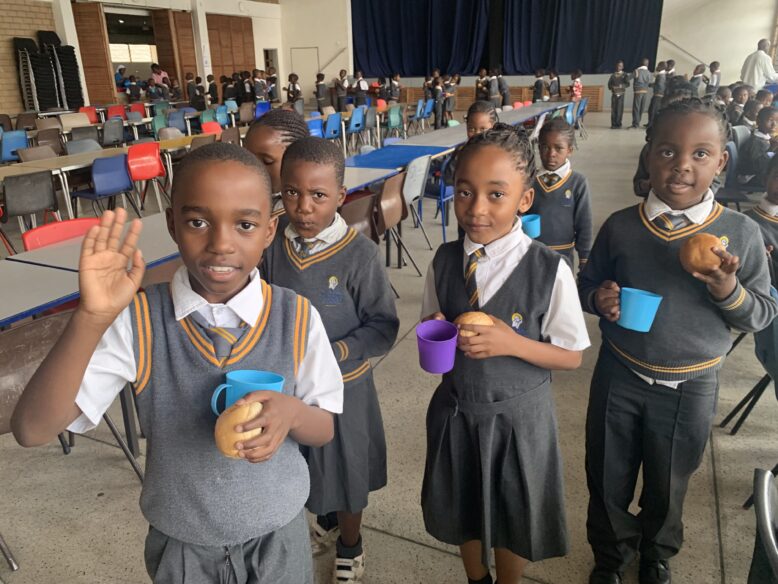
At this primary school within MQOP, many children helped us take photographs for partner schools during lunchtime while holding drip packs of Malawian coffee.
We also introduced the wider work of Beehive through collaboration with Japanese government officials working on loneliness and isolation countermeasures and with the Canadian nonprofit organisation Virtual Photo Walk.
This allowed us to introduce people in Japan to the social impact that Seibo and its partners are creating in Malawi.
Carlo Acutis Secondary School and Future Collaboration
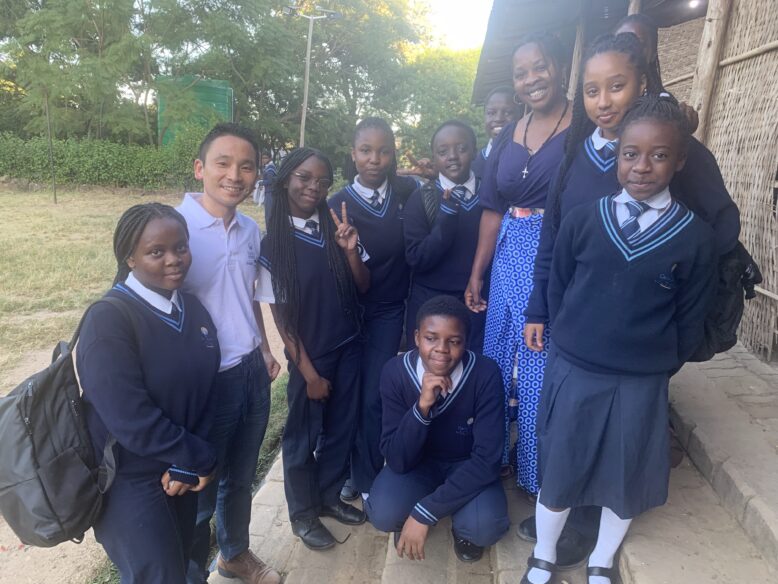
At this secondary school, we introduced Seibo Maria and Seibo Japan.
We asked the students, “Do you know the organisations involved in supporting your school meals?” We also introduced Japan and explained how the connection between Malawi and Japan is being transformed into a learning opportunity.
You can watch the activities from that day below.
Carlo Acutis currently has a girls’ dormitory, which is being expanded.
The school buildings will also grow in the future, and a boys’ dormitory is planned.
Additional Update: The BeeTailor Team and Chitenje Fabric
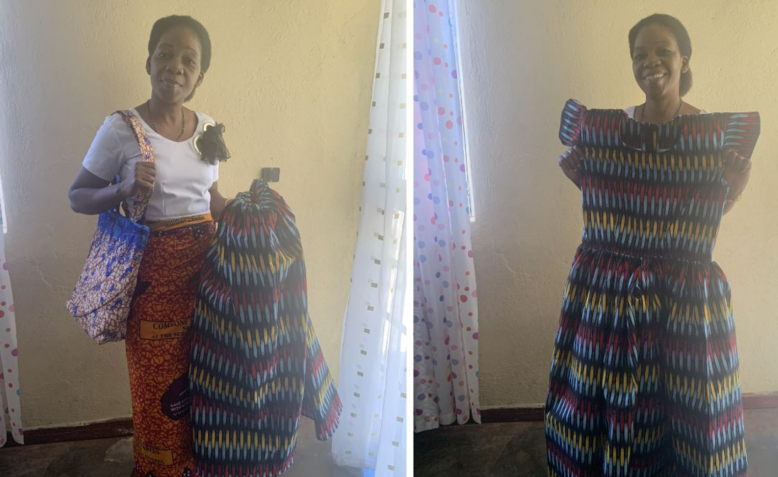
Within Beehive, Selina, who has worked there since Beehive was founded, made dresses and shirts for us using chitenje fabric.
They were very reasonably priced, so we hope to wear and sell them at events in Japan in the future.
We are also considering creating products such as small shoulder bags by combining chitenje fabric with sections of roasted-coffee burlap sacks provided by Chimoto Coffee.
Special Activities and Connections to Public Relations
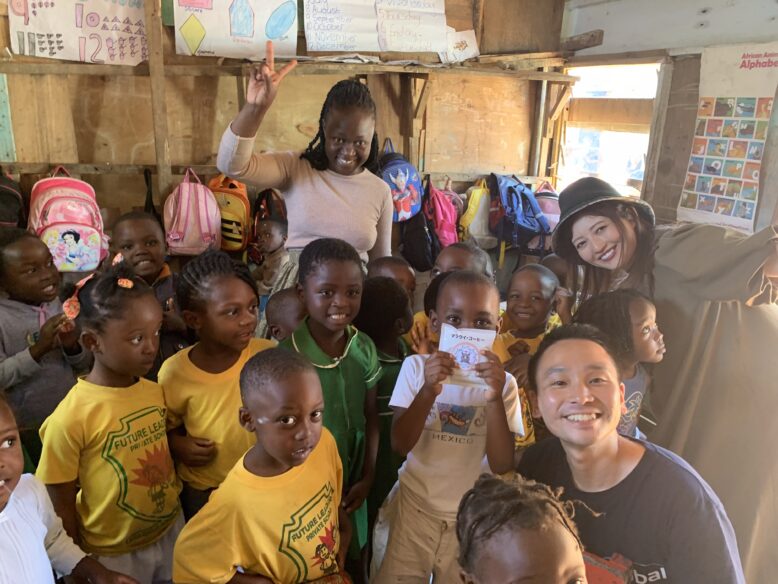
During this visit, Kanafukin, who was deeply involved in Expo 2025 Osaka as a media representative, joined us as a special guest.
We recorded video messages from the children expressing their gratitude for the Expo to the people in Japan who had supported them through the event.
This was an important opportunity to secure powerful local public-relations and media material.
Kanafukin’s Instagram channel is introduced here.
Seibo also offers coffee with a commemorative Expo 2025 Osaka label, which can be purchased here.
Additional Update: A Guest Who Served Malawian Coffee at a Wedding Reception Visited Us
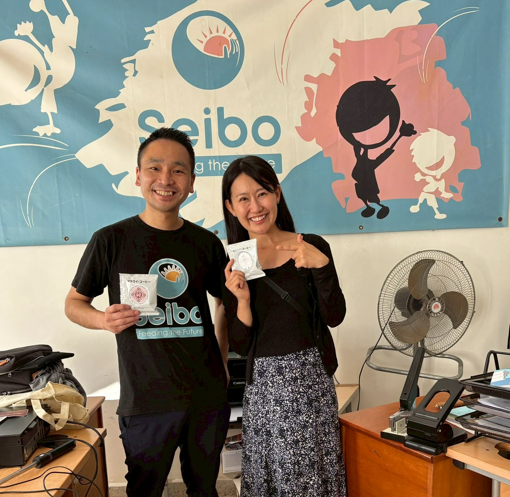
In 2026, Mr. Takahashi, who served Malawian coffee at his wedding reception, travelled all the way to Malawi to visit us.
He entered Malawi from Tanzania after a long journey, visited Seibo’s office in Blantyre, and joined us in observing a school-feeding site.
We are deeply honoured that someone who first became interested through coffee went on to develop an interest in Malawi and in the school-feeding programme itself.
Thank you very much for visiting us.
Collaboration with Beehive Digital and the Provision of Educational Added Value to Japan
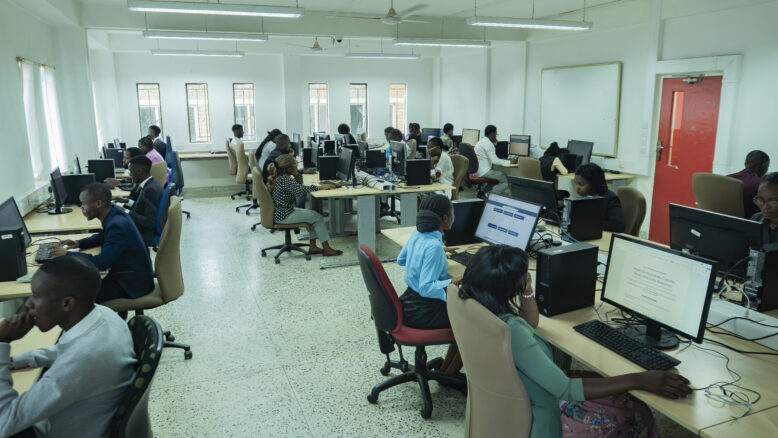
From 2026 onward, Seibo Japan and the Beehive Digital Team will begin offering classes called Impact Lessons.
This will add a new element to the social-business classes we have provided through a network of approximately 70 schools in Japan, ranging from primary schools to universities, built up by 2026.
A proposal describing the classes we have offered to date is available here.
Our expanding network can be viewed here.
Working online with the Beehive team in Malawi, where Wi-Fi and computers are now available, students will have opportunities to learn about Malawian culture, daily life, the social impact of work, coffee, tea, other industries, and the local economy.
These activities will provide greater educational added value to people in Japan while also supporting Malawi and helping to create employment for its growing population.
Applications and further details are available here.
We also offer an upgraded version of these online classes: a one-month programme that can be completed through a combination of on-demand lessons and assignment support from Japanese instructors.
The programme introduces business ideas that can also be developed in Japan, examples of activities undertaken by interns of various nationalities inside and outside Japan, and an opportunity to obtain an internship certificate.
The course can be taken easily through the Moodle online platform.
Please see further details here.
Seibo Mills and the Development of a More Self-Sustaining School-Feeding Programme
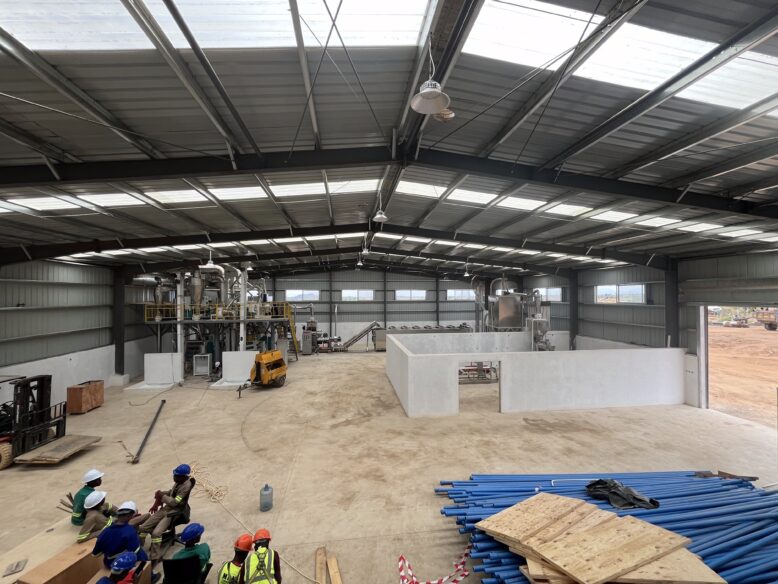
Near Chileka Airport in Blantyre, southern Malawi, Seibo has begun operating a factory that produces Likuni Phala, the main ingredient used for school meals, together with our partner organisation, the Krizevac Project.
The facility has two buildings. The first receives and stores raw maize flour purchased directly from farmers.
The second building is where the product is processed into the school meals we distribute. Vitamins are added separately in powdered form, and the finished product undergoes hygiene inspections.
The completed maize flour becomes Likuni Phala and is delivered to Blantyre in southern Malawi and Mzimba in northern Malawi.
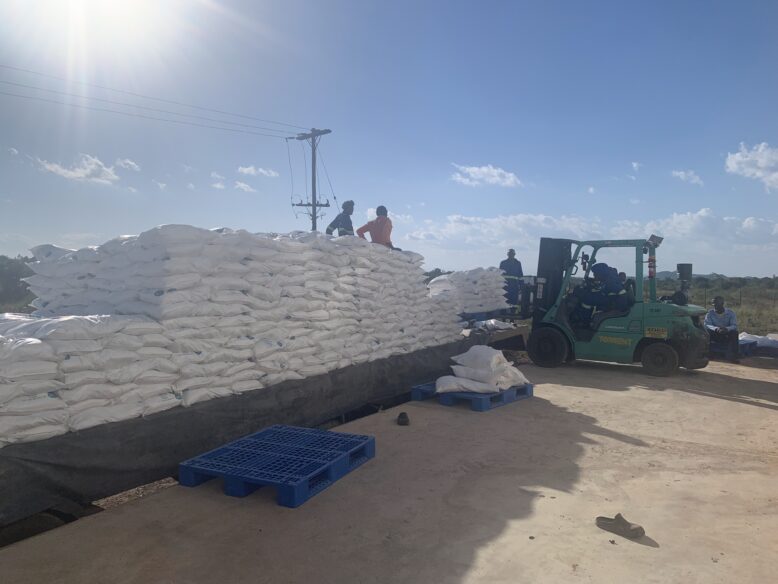
For deliveries within Blantyre, the school meals are loaded onto a truck under the supervision of Seibo’s local staff. Staff then follow directly behind the truck all the way back to the Beehive office to ensure that none of the bags fall off, demonstrating thorough risk management.
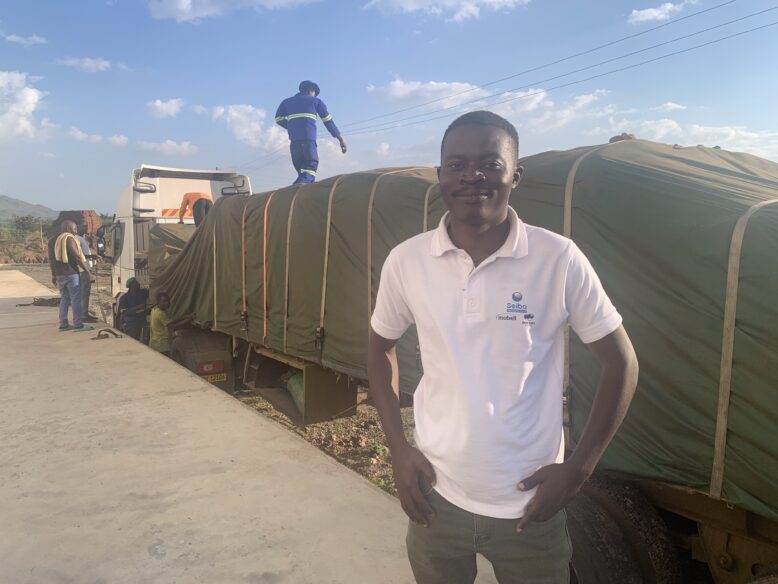
For deliveries to the north, detailed arrangements are made with the driver and day labourers. The truck bed is then wrapped and secured very carefully to prevent any bags from falling.
Watching the team spend a considerable amount of time loading and securing the cargo before departure left a strong impression on us.
At the same time, we were deeply impressed by the strong sense of responsibility shown by Seibo’s staff.
The Work of School Feeding Officers
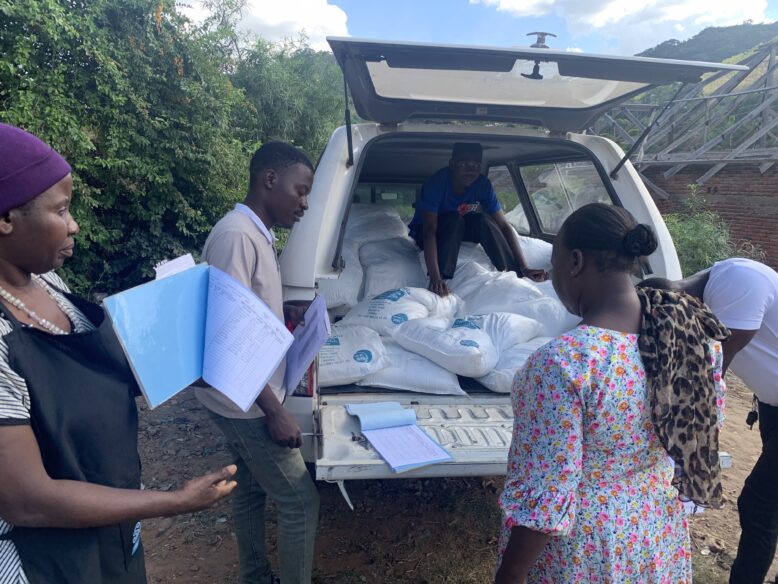
The physical implementation of the school-feeding programme is carried out by five staff members based in Blantyre and three additional staff members in Malawi.
Their main responsibilities are as follows.
① Transporting School Meals and Checking Stock
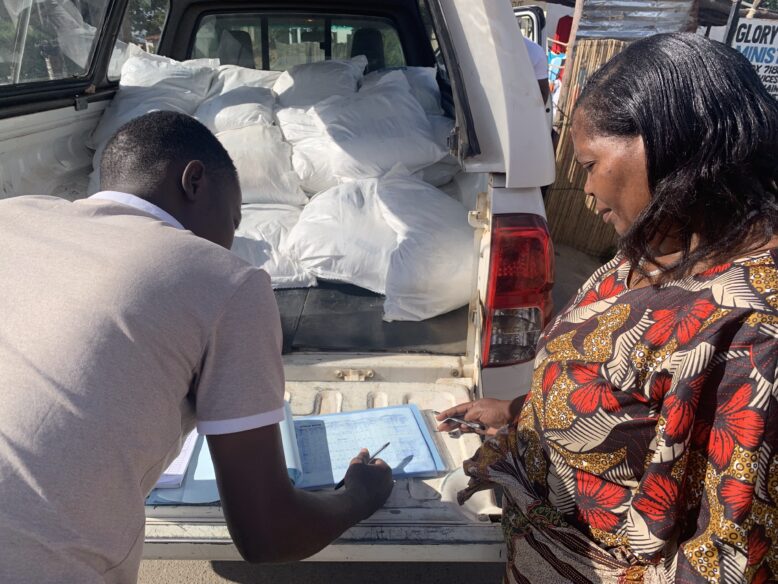
By checking storage conditions and how meals are allocated and distributed to the children, staff determine how many children were actually able to eat and whether the availability of meals encouraged them to attend school and improved attendance.
We felt that checking the amount initially distributed, known as the Opening Balance, and the amount remaining after consumption, known as the Closing Balance, was especially important.
CBCCs also have community members who care for the local community and committee members who record operating conditions in notebooks and report them to the government. Seibo signs Memoranda of Understanding with these members and works in partnership with them to confirm that school meals are provided consistently and reliably.
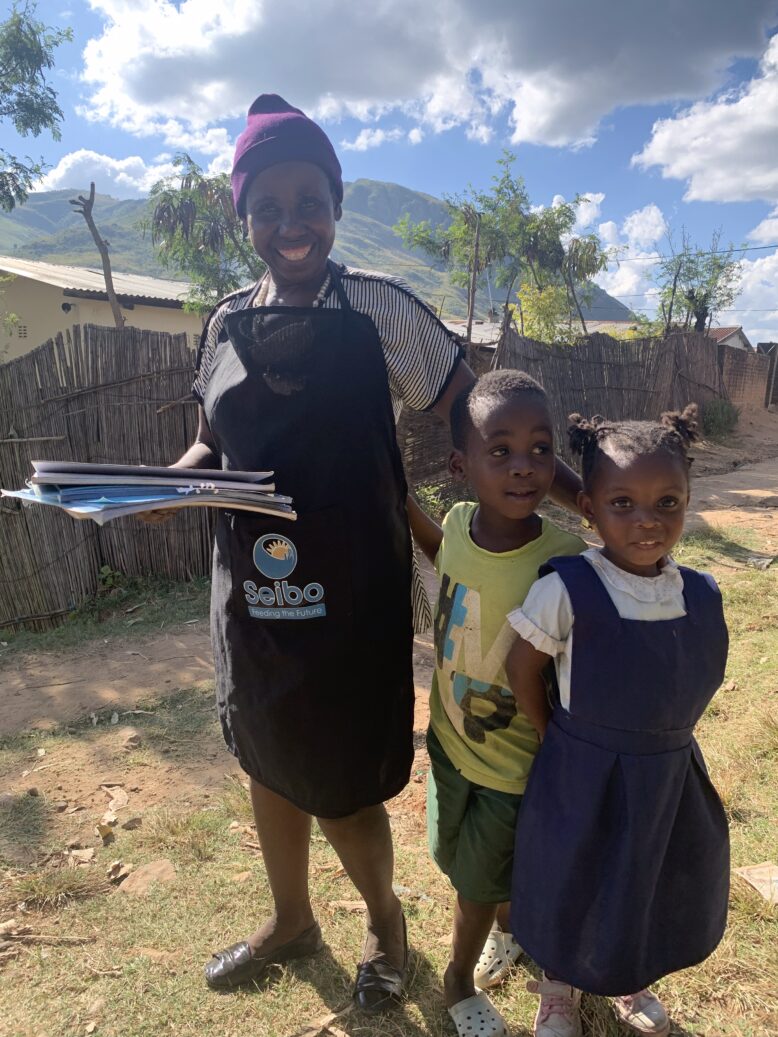
② Communicating with Community Members and Supporting Daily Life
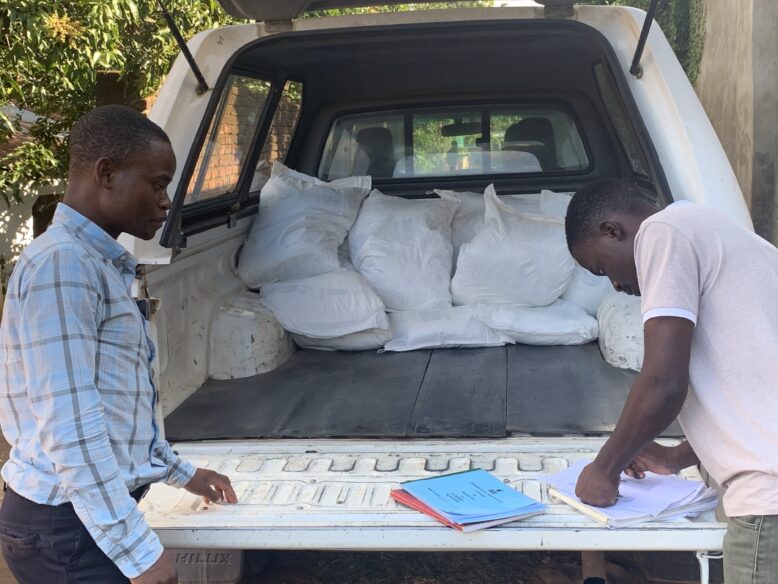
Through everyday communication, staff provide support related to the school-feeding programme, including clothing, plates for school meals, and repairs to kitchens.
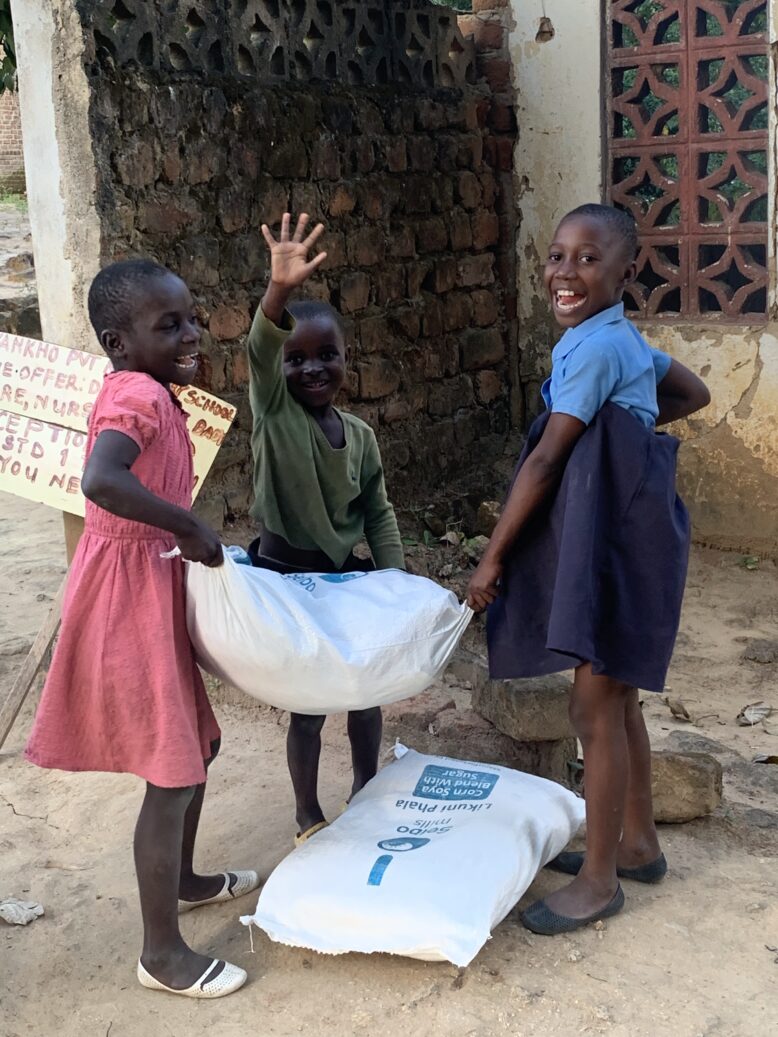
③ Providing Photographs and Videos for Media Use

Even when no Japanese staff members are present, staff in both southern and northern Malawi communicate several times each week with Yamada and other team members.
They also create messages requested for supporting companies, cafés, schools, and other partners.
The Future of Likuni Phala

Going forward, Likuni Phala will be sold to charities in Malawi and supplied wholesale to supermarkets.
At the same time, we are considering exports to countries outside Malawi, including Japan.
Tokushima Municipal High School, Seisa High School, and projects run by Seibo’s student staff already include schools developing menu items that combine Likuni Phala with Japanese ingredients.
(A specific example is available here.)
In the future, we hope to import maize flour produced in Malawi into Japan and use it to make and sell nutritious foods and confectionery.
Our goal is to create a circular product model in which the base ingredient used for Malawian school meals contributes to school-meal support from Japan.
When products connected to school-meal support for children in Malawi reach people in Japan, they make support for African school meals feel more immediate and tangible.
Purchasing raw materials from the factory in Malawi will indirectly support the school-feeding programme by contributing to the factory’s operating costs. When those ingredients are given additional value and consumed in Japan, the resulting profits can then circulate back to Malawi as further school-meal support.
Stay in Lilongwe: Embassy Meeting and Appearance on Sunrise

We stayed for one day in Lilongwe, the capital of Malawi.
During dinner with Ambassador Naito, the Ambassador of Japan to Malawi, we discussed Malawian coffee, tea, and chocolate; how these businesses can be applied to educational programmes in Japan; collaboration with students and partnerships with companies at Expo 2025 Osaka; and the implementation of the One Village, One Product Market in cooperation with JETRO.
We were able to share many ideas about connecting Japan and Malawi, and a follow-up meeting was later held in Japan.
At the end of the trip, we appeared on Sunrise, a local television programme.
Please watch it below.