

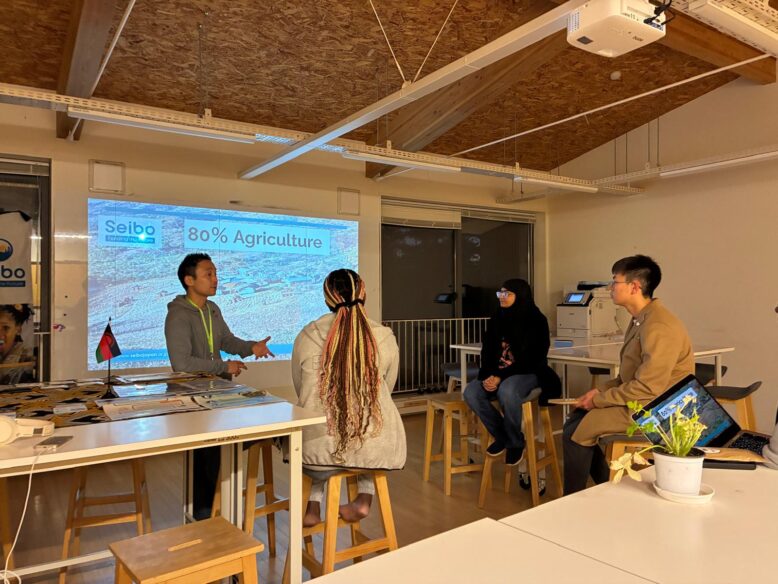
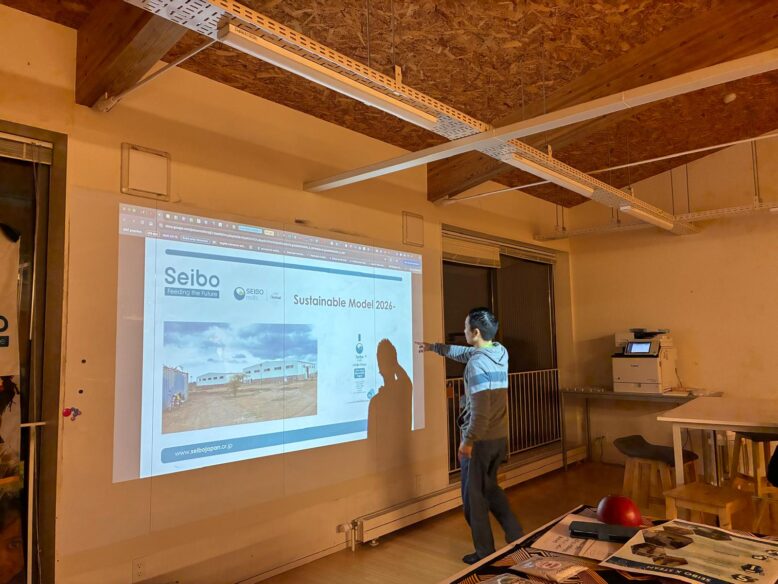
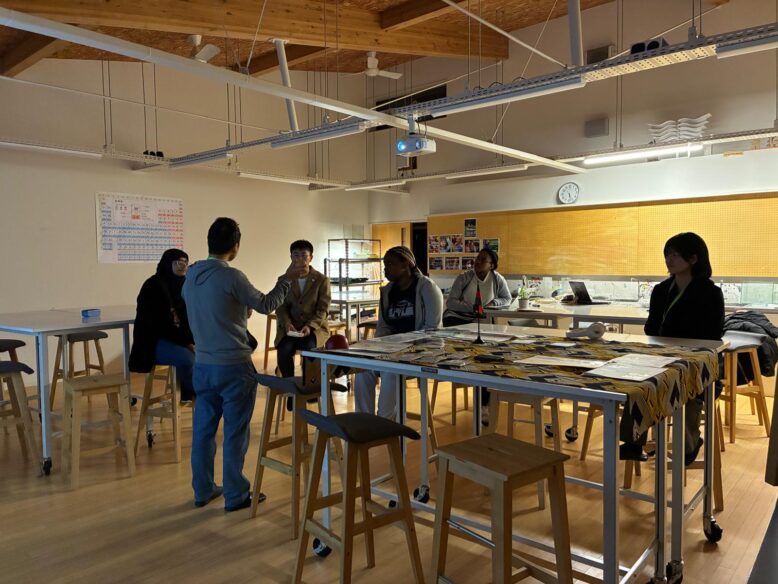
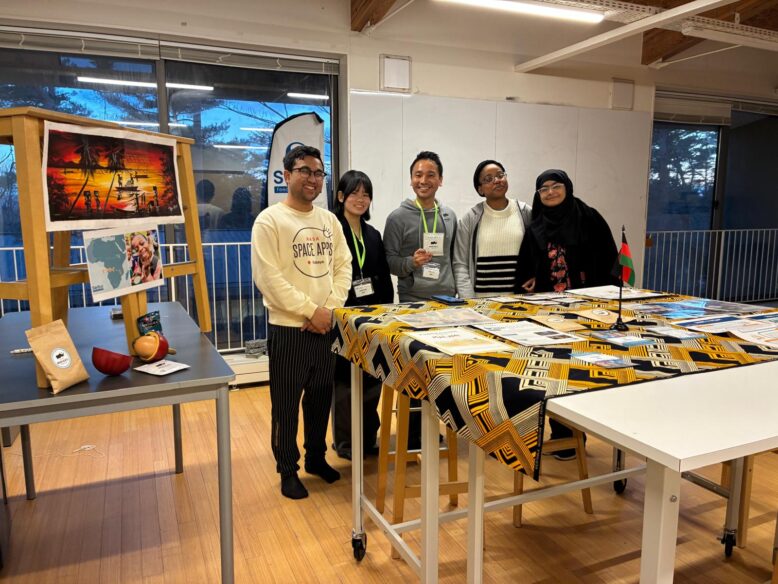
During our recent visit to UWC ISAK Japan in Karuizawa, Seibo had the opportunity to speak with the members of the Science Club about how our work in Malawi connects to the principles of STEAM education.
We shared updates on our school meal programme, the progress of our community projects, and the IT school we co-run with Mobal in Malawi.
The students are currently preparing “A Coffee Day at ISAK” under the theme:
Coffee Connection: Brewing Awareness for a Sustainable Future
As part of the event, they introduced activities using Seibo’s sustainably sourced Malawian coffee.
Malawi’s Current Challenges
Approximately 80% of Malawi’s population works in agriculture.
In recent years, extreme weather events—including cyclones in 2022–2023 and the impact of the El Niño phenomenon—have made it increasingly difficult for families to rely solely on farming income to support their children.
In this context, we explained the importance of school meals as a gateway to education, enabling the next generation to gain skills and expand their future opportunities.
Learning Through Coffee: Science, Sustainability, and Innovation
We brought a model of Malawian coffee beans, using it to illustrate:
-How silver skin (the thin layer inside the coffee bean, usually discarded) can be repurposed
-Ways to use roasted coffee grounds to create new sustainable products
-How a circular mindset—valuing people, materials, and life itself—can lead to innovative thinking
We also introduced the production process of Malawian coffee, which is:
-Washed process
-Naturally grown
-Designed to create a clean, bright flavour
Students also learned about:
-The scientific aspects of processing, including washing stations and community business centres
-How supply chains can be structured to support sustainable development
The partnership between Seibo and Ataka Trading Co., Ltd., which promotes Malawian coffee aligned with SDGs and supports school meals in Malawi
We further explained how students themselves can become part of this supply chain, developing unique business ideas connected to real-world impact.
Looking Ahead: Local Production for Local Children
Finally, we shared our long-term vision:
Using revenue generated through coffee-related social business to support the construction of local milling facilities in Malawi.
This will allow communities to produce school meal flour locally, sourcing maize directly from Malawian farmers and moving toward full self-sufficiency.
The students responded with great enthusiasm, recognizing how fundraising and creative business models can directly support children’s futures in Malawi.
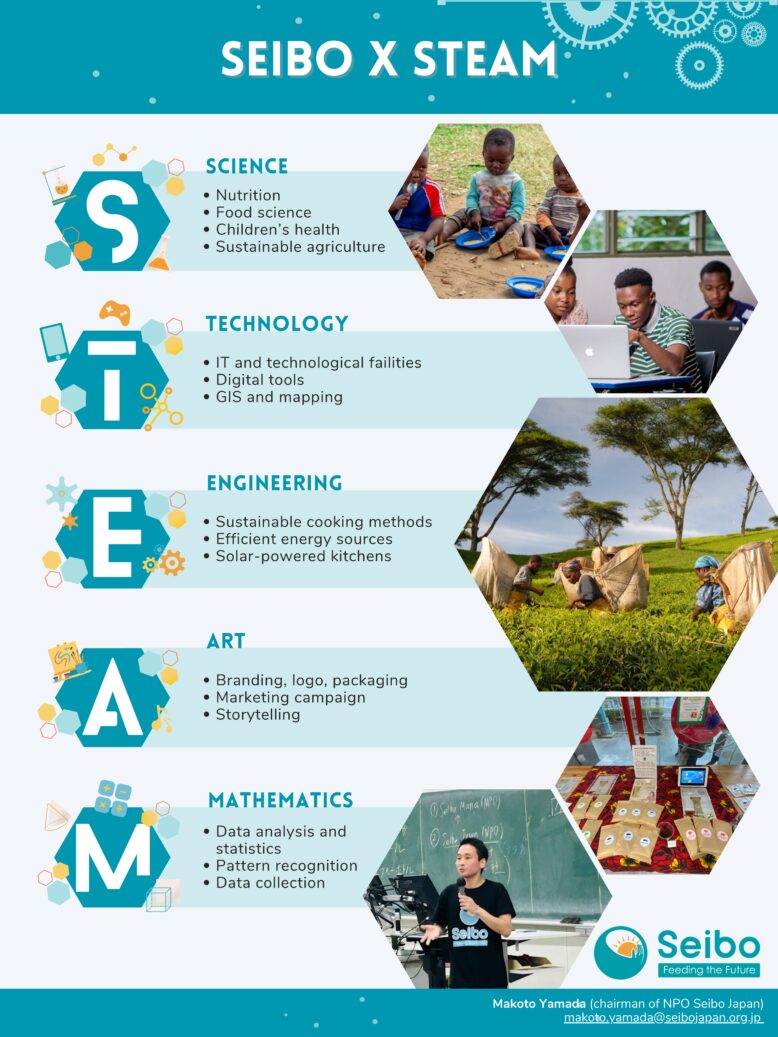
How Seibo Connects with STEAM Education
S: Science
Seibo’s core activity—providing nutritious school meals—relates directly to scientific fields:
-Nutrition (including Likuni Phala, a high-nutrient maize–soy porridge)
-Food science
-Children’s health
-Sustainable agriculture
-Student inquiry themes include:
-Analyzing the effect of school meals on health and attendance
-Investigating Malawi’s climate, soil conditions, and agricultural systems
T: Technology
Seibo contributes to the development of Malawi’s digital education:
-Collaboration with Beehive and Krizevac Projects
-IT training at St. John Paul II College & IT Institute
-Use of digital tools and GIS
-Supporting national digital transformation for socio-economic growth
E: Engineering
Seibo is working on engineering-focused solutions, including projects planned for 2026:
-Low-cost, fuel-efficient cookstoves
-Solar-powered kitchens
These initiatives aim to improve the sustainability of school meal production in Malawi.
A: Art
Creative communication plays an essential role in Seibo’s mission:
-Logo and packaging design (including the colourful Malawian rhinoceros motif)
-Marketing and poster campaigns
-Storytelling and educational materials
Practical student tasks include:
-Designing packaging for coffee or tea
-Creating educational content introducing Malawi
M: Mathematics
Seibo continuously gathers and analyzes programme data in Malawi:
-School attendance and registration records
-Number of meals served
-Data-driven evaluation of school meal impact
Mathematical exploration includes:
-Statistical analysis
-Pattern recognition
-Data visualization
-Studying how school meals influence children’s learning behaviours