

Students from Shizuoka Salesio Junior High School created a picture book that explores the issues of poverty and labor conditions in Malawi.
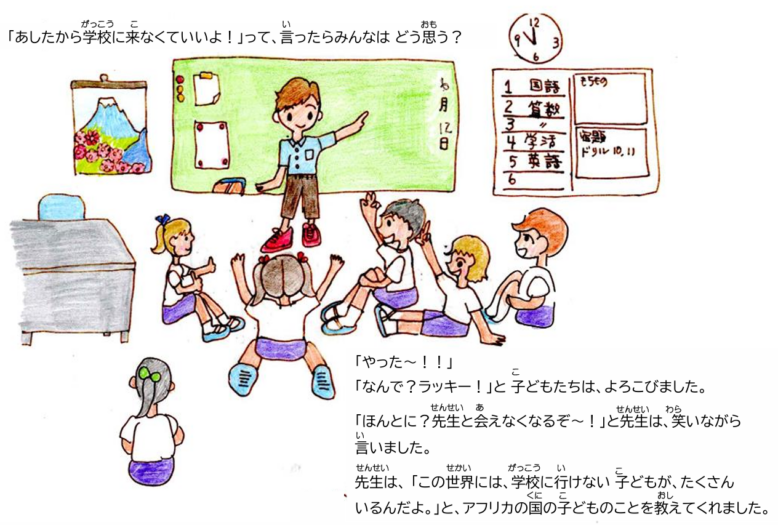
“What would you think if someone told you, ‘You don’t have to come to school anymore starting tomorrow’?”
Beginning with this simple yet powerful question, this picture book gently and deeply invites readers to reflect on something we often take for granted: the everyday privilege of being able to go to school.
・Story Overview
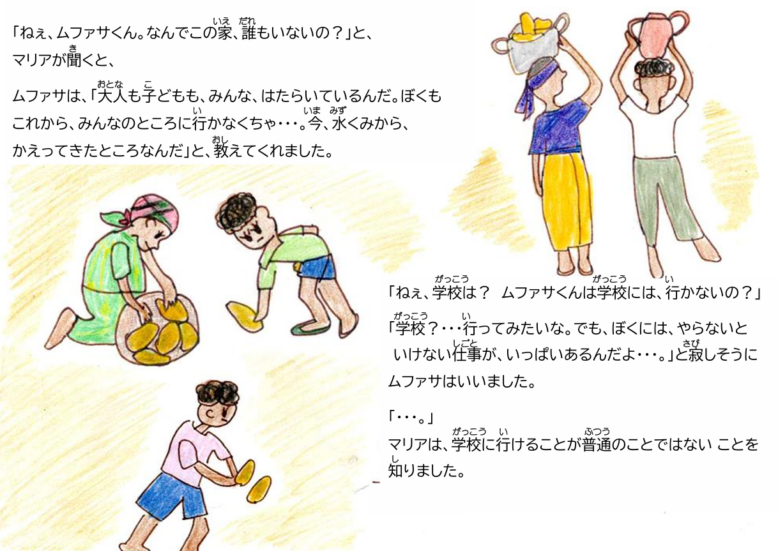
The main character, Maria, hears from her teacher that there are many children in the world who want to go to school but cannot. Unable to stop thinking about this, Maria is suddenly approached by a mysterious fairy.
Guided by the fairy, Maria finds herself visiting a country in Africa.
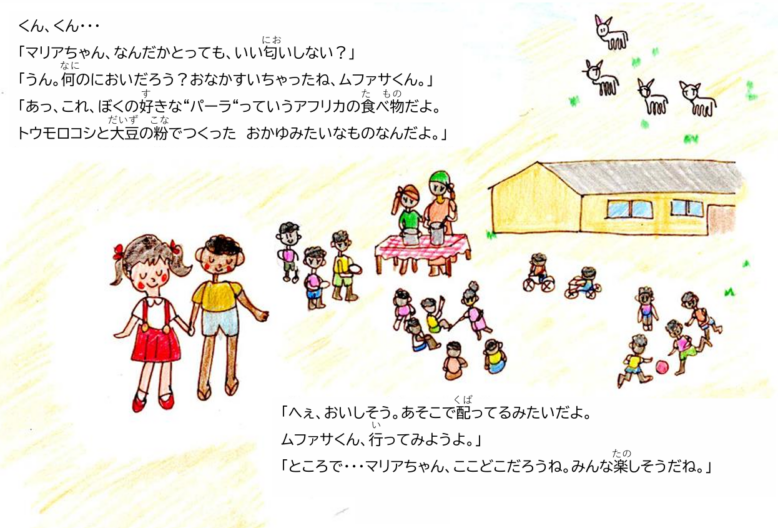
There, she meets a boy named Mufasa. Every day, he is busy carrying water and doing household labor, leaving him unable to attend school.
“School? I’d like to go someday. But I still have so much work that I have to do,” he says.
Hearing these words, Maria realizes for the first time that going to school is not something everyone can take for granted.
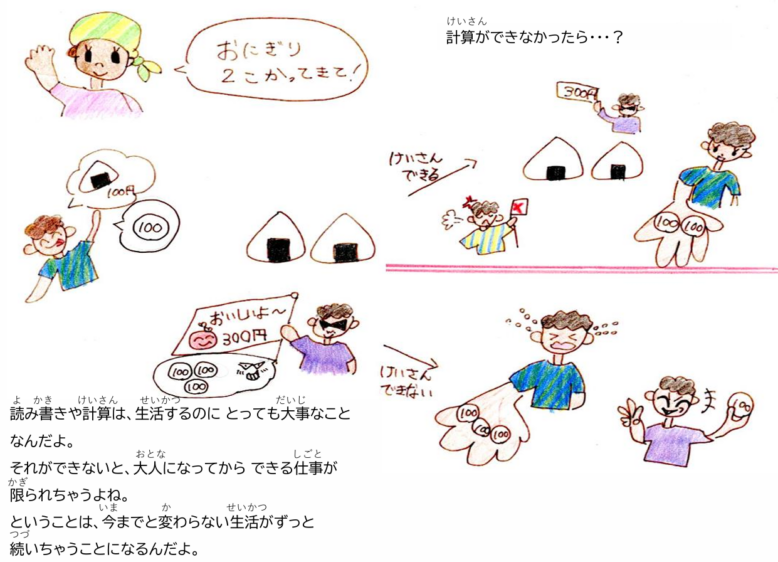
The story highlights the following issues:
・The heavy labor children must complete each day
・The widening gap in life choices caused by not being able to read, write, or do basic math
・Underlying factors such as poverty, gender inequality, and war
All of these themes are carefully portrayed through language and illustrations that are easy for children to understand.
In the latter half of the story, Mufasa experiences “school” for the very first time.
・The joy of being able to write his own name
・The happiness of learning together with friends
・The warmth of sharing laughter while eating a school meal
These experiences light a spark of hope in Mufasa’s heart — the desire to learn and to discover what he wants to do in the future.
At the end of the picture book, a quiet but meaningful question is posed to the reader:
“If it were you, what would you do for a friend like Mufasa who cannot go to school?”
This book does not force an answer.
Instead, it gently hands each reader an opportunity to think for themselves.
For Use in Schools and at Home
This book can also be used for the following educational purposes:
・SDGs (Goal 4: Quality Education for All)
・Global and intercultural education
・Career education and human rights education
It works especially well with these themes and can naturally lead to discussion and activities after a read-aloud session.
To access the whole picture book, please find it from here.
“Learning is the power to choose one’s future.”
This book quietly delivers that important message to the hearts of children.