


On August 29 and 30, NPO Seibo (NPO Catholic Mission Seibo) joined current high school students and schoolteachers on stage at the Catholic Education Society Conference held at Nanzan University. Together, they delivered a presentation showcasing the educational achievements and future possibilities created through collaboration between NPOs and school educators.
Under the conference theme—”Standing in Between and Engaging in Dialogue:
Inside and Outside Catholic Education, and Towards Dialogue”—this presentation brought together high school students, teachers, university students, and NPO representatives to share practical case studies connecting schools with broader society.
Beyond a simple case report, the session served as a powerful demonstration of the deep learning outcomes generated through cross-sector partnerships.
1. Key Presentation Highlights
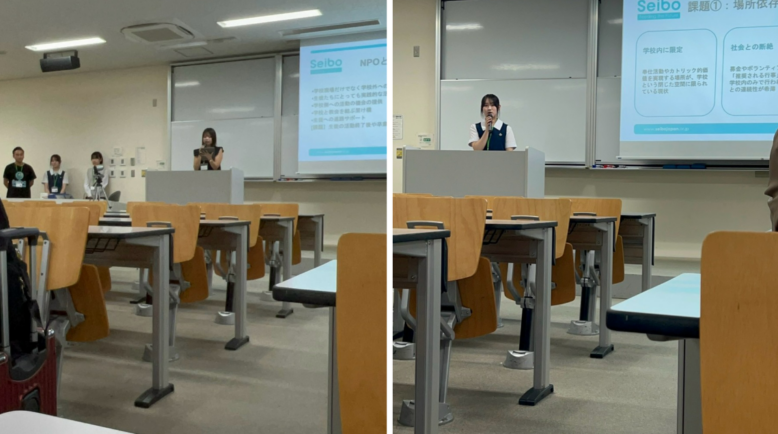
The presentation focused on how students at Catholic schools grow and connect with society through their activities with NPOs. Here are the core concepts presented during the session, explained with brief definitions.
① Connecting Beyond the Classroom to Society
Presenter: Airi Oguma (3rd-year student, Sacred Heart Senior High School)
Drawing from her study abroad experience in Spain, Airi examined the current challenges in Japanese Catholic education and the role NPOs can play in addressing them.
What is “Place Dependence”?
A state where volunteering and social contribution activities remain confined within the school (e.g., internal school events), making it difficult for students to take self-motivated action after graduation.
What is “Translation Ability”?
The capacity to translate core Catholic values—such as service and compassion—into actionable, real-world forms and business models within economic contexts driven by efficiency and profit.
Airi highlighted NPO Seibo’s initiative of supporting school meals in Malawi through the sale of Malawian coffee. By engaging in the planning and sales operations, students go beyond one-off fundraising (“place dependence”) to cultivate “translation ability”—the power to put their values and spirit of service into active, economic practice.
② Hands-on Inquiry Learning: Experiencing “Consumption as Support”
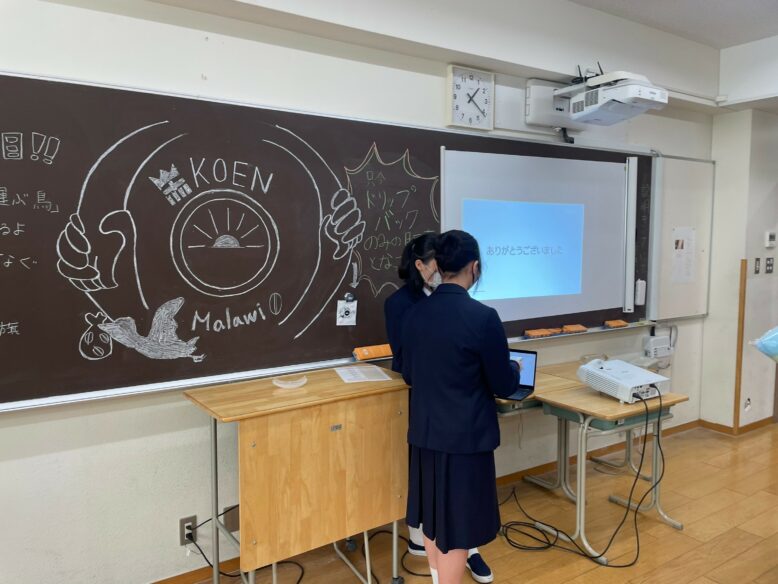
Presenter: Rina Kitajima (3rd-year student, Koen Girls’ Senior High School)
Rina shared practical examples of activities conducted at her school, including workshops and Malawian coffee sales at Christmas gatherings.
What is “Social Business”?
An approach to solving social issues—such as poverty and environmental challenges in developing nations—by utilizing sustainable business mechanisms (selling and purchasing products) rather than relying solely on donations.
Through selling coffee, students directly experienced how an everyday action like buying a product directly funds school meals for children in Malawi. Rina reported that this led to self-directed “inquiry-based learning,” with students even pitching long-term sustainability proposals back to NPO Seibo.
③ A Teacher’s Perspective: The Benefits of Schools as Partners
Presenter: Yuichiro Nishiyama (Teacher, Fukuoka Futaba Junior and Senior High School)
Mr. Nishiyama, who works closely with Seibo to organize “Fairtrade Cafes” and study sessions at his school, shared his perspective as an educator.
He pointed out that when a school serves as the official point of contact for an NPO, initiatives remain sustainable and continue to evolve even as students graduate and new cohorts arrive. These practical, out-of-classroom learning experiences foster personal growth and enrich students’ pathways for university admissions and future endeavors.
【Session Facilitator】
Sena Tsuruta (2nd-year student, Nanzan University / Student Staff Representative, Seibo)
Sena first encountered NPO Seibo through her high school club activities at Hikarigaoka Girls’ High School. Today, as a university student, she continues to mentor high school students and manage events for Seibo. As a living example of continuous learning spanning middle school, high school, university, and NPO engagement, Sena skillfully guided the presentation session.
2. Warm Hospitality: Catering & Meaningful Connections with Teachers
The conference featured not only lively discussions inside the presentation hall but also meaningful collaboration in the hospitality area.
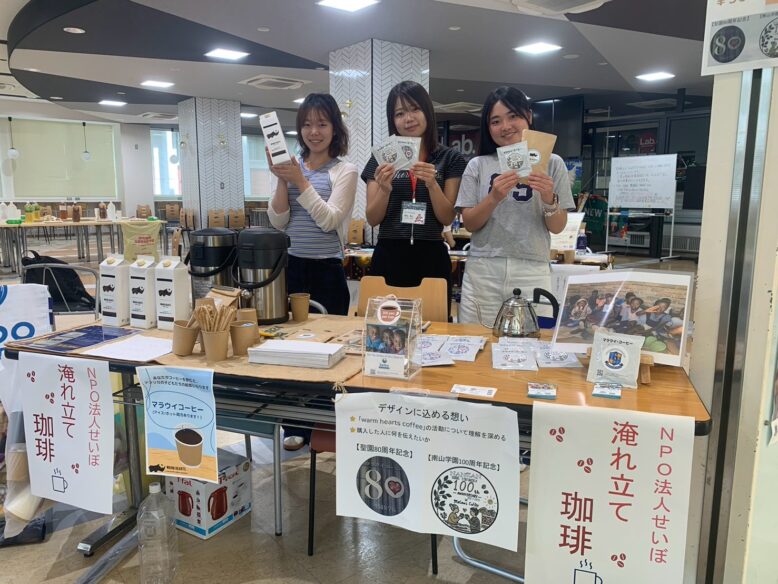
The catering corner during the conference was jointly run by university students from Nanzan University and high school students from Hikarigaoka Girls’ High School in Okazaki City, Aichi Prefecture.
Together, they served Malawian coffee—a signature symbol of Seibo’s work—and other beverages with warm smiles to teachers and educational professionals from across the country. Over a warm cup of coffee, direct conversations and exchanges of ideas naturally unfolded between the students and educators, creating a wonderful space for deeper connection.
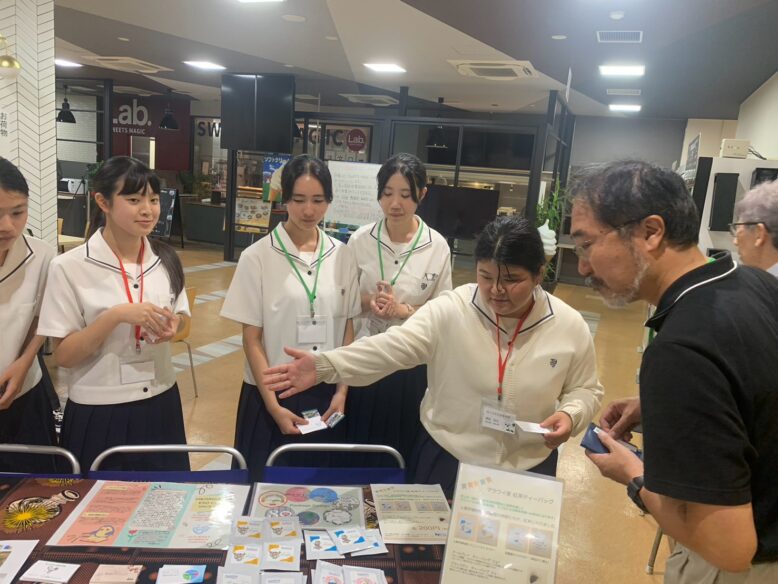
Rather than just listening to presentations, attendees experienced firsthand the “culture of warm dialogue” that NPO Seibo and Catholic schools have nurtured together.
Conclusion: The Future of Education Driven by Multi-Stakeholder Collaboration
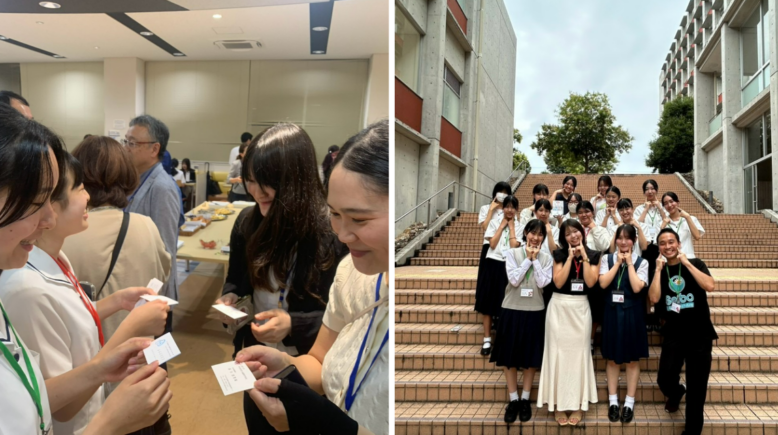
The presentation at this year’s Catholic Education Society Conference was the culmination of collaborative efforts built by a diverse team of high school students, teachers, university students, and NPO members, each honoring one another’s perspectives.
By having an NPO stand “in between” the school (inside) and society (outside), learning in the classroom steps out into the real world, transforming into practical power for social change. NPO Seibo remains committed to flexibly bridging educational institutions with society, continuing to cultivate spaces for “dialogue and action” alongside the leaders of tomorrow.