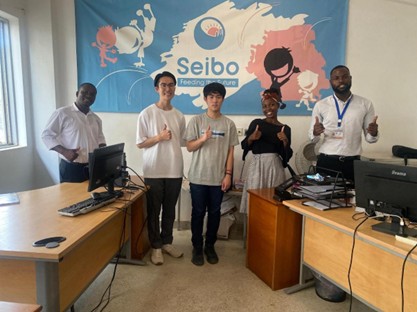


From October to November 2025, two student staff members from the nonprofit organization Seibo Japan visited Malawi for approximately two weeks. This trip marked the first on-site visit by Seibo’s student staff and became an important first step toward establishing a sustainable system for future student dispatches.
You can find the report from here!
The Reality of School Meal Programs
Seibo operates through two complementary entities: Seibo Maria, a local NGO in Malawi that implements school feeding programs, and Seibo Japan, which is responsible for fundraising and public outreach in Japan. The primary purpose of this visit was to directly observe, on the ground, the changes that school meals are bringing to children, schools, and local communities.
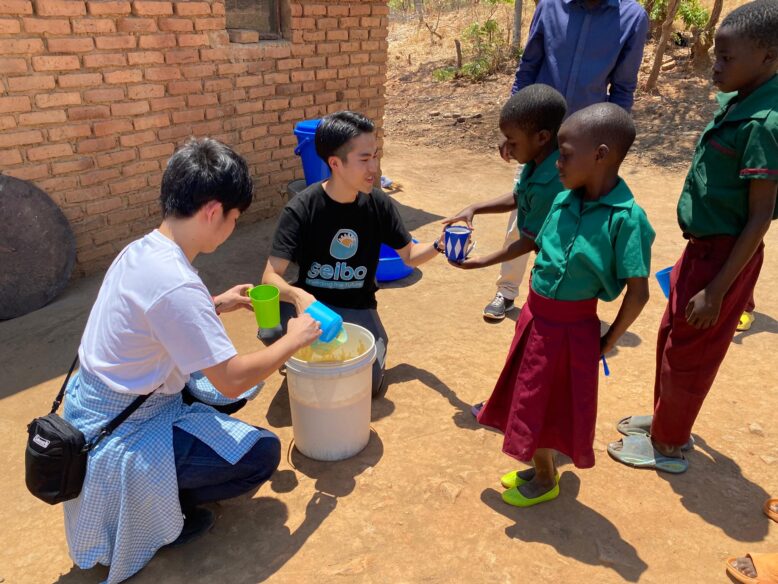
During visits to primary schools, nursery schools, and CBCCs (Community-Based Childcare Centres) in both the northern Mzimba region and the southern Blantyre region, it was striking to see that school attendance was higher on days when meals were provided, and that children appeared noticeably more energetic and engaged. In some schools, student enrollment has more than doubled since the introduction of school meals, and exam pass rates have improved dramatically.
Local voices shared comments such as, “Children come to school because there is a meal,” and “Some children want to attend school even when they are sick, just so they can eat.” These testimonies made it clear that school meals have become not merely a form of aid, but the very foundation that enables learning.
A Community-Supported and Self-Reliant System
School meal programs are sustained through close cooperation among local staff, parent volunteers, and school personnel. Food stock management, hygiene conditions, and attendance numbers are regularly monitored to ensure transparency and accountability.
In addition, many schools have adopted flexible, community-based solutions tailored to local realities—for example, schools where children bring firewood for cooking, or schools that share church buildings as kitchens. These creative adaptations reflect strong local ownership of the program.
Social Enterprises Supporting “Self-Reliance”
As part of this visit, the team also observed several social enterprises that provide long-term support for school feeding programs. These included the bicycle sales business Beebikes, the IT services company Beetech, and Seibo Mills, a new factory established to produce school meal ingredients in-house.
Profits generated by these enterprises are reinvested into educational institutions and school meal programs. Seeing the concept of “businesses that sustain support” taking tangible shape on the ground left a strong impression.
Toward the Next Step Connecting Japan and Malawi
Meeting in person with local staff, Japanese volunteers, and community members—many of whom the students had previously known only online—became a profound turning point for the student staff.
The everyday lives of children, the atmosphere as they wait for meals—these are realities that cannot be fully conveyed through photos or reports alone. How to translate these lived experiences into meaningful action and communication in Japan is both a major challenge and a source of hope moving forward.
It is our hope that this visit will help more people feel closer to Malawi and inspire a growing circle of support for children who wish to continue learning.