

Data-Driven School Feeding: Making Support Visible for Children in Malawi
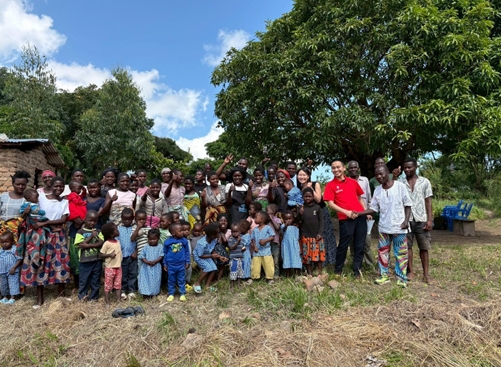
To deliver daily school meals to children in Malawi, it is not enough to provide food alone. It is also essential to understand where support is reaching, where gaps still remain, and how resources can be directed to the communities that need them most.
In recent years, international organisations such as the World Food Programme have made school feeding coverage and regional inequality in Malawi more visible through data dashboards. By comparing this wider national picture with Seibo Japan’s own field-level data from schools, nurseries, and Community-Based Childcare Centres (CBCCs), we can better understand both the impact Seibo is already making and the gaps that still need attention.
Seibo Japan supports school feeding in nurseries and CBCCs in southern Malawi, as well as primary schools in northern Malawi. In 2026, Seibo published a school feeding area map to make this support easier to understand and more transparent for supporters.
Seeing Seibo’s School Feeding Support Through Data
Seibo’s school feeding work is made possible through cooperation with local staff, schools, caregivers, and community volunteers. The current scale of support is as follows.
・Total supported locations: 55 schools and centres
・Northern Region, Mzimba District: mainly 12 primary schools
・Southern Region, Blantyre District: 28 nurseries and 17 CBCCs
・Children supported: approximately 20,000 children every day
・Meals delivered in 2025: 3,358,613 school meals
The Reality Behind Government Statistics
Malawi continues to develop policies and systems for school feeding and early childhood development. However, at the local level, information about CBCCs and nurseries can sometimes be limited, incomplete, or difficult to verify.
Government statistics and international datasets are important for understanding national trends and regional gaps. However, they may not always show the full reality of each community: how many children are actually attending, how much food is needed, what facilities are available, or what operational costs are required to keep feeding running.
This is why Seibo’s own field data is so valuable. By collecting information directly from the schools, nurseries, and CBCCs we support, Seibo can understand the number of children reached, the meals required, and the operational costs involved. This makes support more accurate, transparent, and sustainable.
What Seibo’s Data Helps Show
・Which communities are receiving school feeding support
・Which primary schools, nurseries, and CBCCs are supported
・How many meals are needed for children
・The operational costs of food, cooking, transport, and hygiene support
・Where additional support may be needed in the future
WFP’s Dashboard and Seibo’s Field-Level Data
The WFP school feeding dashboard helps show school feeding coverage and regional gaps across Malawi. This kind of national-level data is extremely useful for understanding the bigger picture and identifying areas where children may still be missing out on support.
At the same time, Seibo’s strength is its direct relationship with local schools, nurseries, CBCCs, and community members. This allows us to collect detailed field-level information that may not be visible in national statistics alone.
For example, even if a region is identified as needing school feeding support, it is still necessary to understand which centre should be prioritised, how much food is needed, whether cooking facilities are available, whether water access is stable, and what kind of local support structure already exists.
By organising this information and sharing it clearly, Seibo can help supporters in Japan see where their donations are going and how they are helping children in real communities.
Turning Donations Into Visible Impact
A school meal is more than food. A bowl of Likuni Phala can help a child come to school, stay in class, concentrate, and grow. It also strengthens the local network of adults who prepare meals, manage food stocks, and care for children every day.
Through Seibo’s programme, 15 yen can provide one school meal, and 3,000 yen can support one child’s school meals for one year. Regular support helps make school feeding stable, sustainable, and part of children’s daily lives.
one school meal
one year of meals for one child
schools and centres supported
children reached every day
From Japan to the Communities That Need Support
Support from Japan helps sustain daily school meals, food supplies, cooking equipment, hygiene items, transport, field monitoring, and the practical work needed to keep school feeding running.
Seibo believes in turning donations into visible support. By using data to show which communities are being reached, how support is used, and how many children are benefiting, we aim to build trust and make long-term support easier to continue.
Becoming a Member: Helping Shape Seibo’s Future
Becoming a Seibo member means more than giving regular support. Members can take part in Seibo’s Annual General Meeting (AGM) and help shape the future direction of our activities, communication, and data presentation strategy.
Going forward, Seibo wants to present not only the number of meals delivered, but also centre-level needs, operating costs, community voices, and visible changes in children’s daily lives.
As a member, you can help us think through important questions: What data is easiest for supporters to understand? What kind of reporting builds trust? Which communities should be prioritised? How can support from Japan become more direct, transparent, and sustainable?
Help Make School Feeding Sustainable
Your continued support helps children in Malawi learn, grow, and receive meals every day.
Reference Links
・WFP Malawi School Feeding & Inequality Dashboard: HERE
・Seibo School Feeding Area Map 2026: HERE
・Seibo Membership and Donation Page: HERE
Seibo will continue using both field voices and data to deliver reliable school feeding support to children in Malawi.